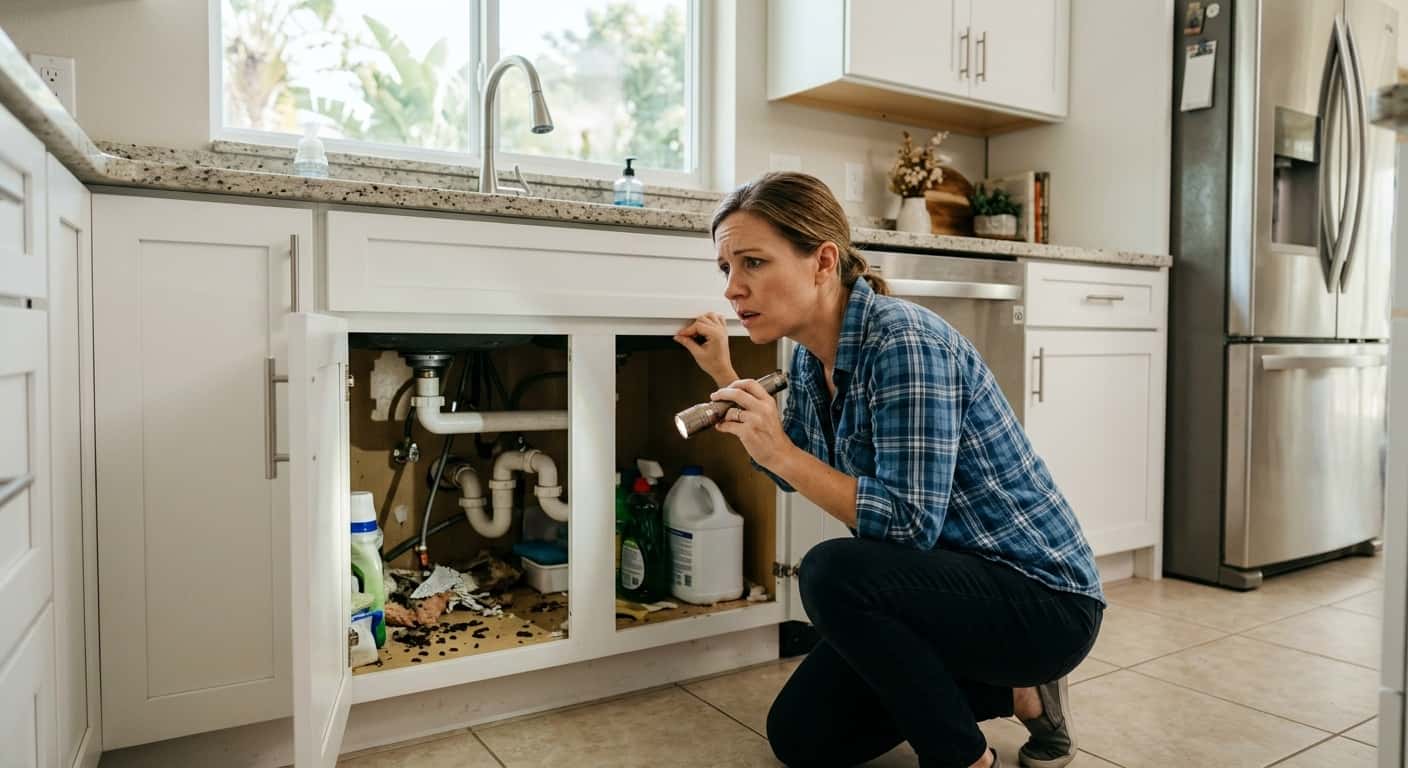
Most people try to handle pest problems themselves before picking up the phone. Understandable. Roughly 74% of homeowners perform some type of DIY pest control. But what looks like a minor issue on the surface rarely tells the full story.
But there’s a line between a minor nuisance and a real infestation. Cross that line, and DIY methods don’t just fail. They give the problem time to get worse. A New York City public housing study found that professional integrated pest management cut cockroach populations by 75% at three months and 88% at six months, dramatically outperforming routine spray-only approaches. Over-the-counter products can’t match that because they treat symptoms without addressing the colony, entry points, or conditions driving the infestation.
Here are the nine signs that it’s time to stop spraying and start calling.
Key Takeaways
- Professional pest management reduces infestations by 75-88%, far outperforming DIY spray-only methods
- Cockroach allergens are detected in 85% of inner-city U.S. homes and trigger asthma in 60-80% of sensitized children
- Rodents invade 21 million U.S. homes each winter and cause 20-25% of house fires of unknown origin
- Every week you delay treatment gives pests time to reproduce, spread, and increase removal costs
Sign 1: You’re Seeing Pests Repeatedly Despite DIY Treatment
Studies show that non-professionals misapply pest products more than twice as often as licensed technicians, and those mistakes are directly linked to human exposure risk and treatment failure. If you’ve sprayed, set traps, or used baits and the problem keeps coming back, there’s a reason.
Recurring sightings after treatment typically mean one of three things:
- You’re treating the visible pests but not the colony. Killing the ants on your countertop does nothing to the colony of thousands in your wall void. Spraying the cockroach you see doesn’t reach the dozens hiding behind your dishwasher.
- The entry points are still open. Pests are entering faster than you can eliminate them.
- Chemical resistance has developed. Repeated exposure to the same over-the-counter product allows surviving pests to pass on resistance traits, making future treatments less effective.
Liberty Pest Management doesn’t just treat what’s visible. We inspect to find the source, identify the species (treatment varies significantly by species), locate entry points, and apply targeted products that match the specific biology of the pest.
Sign 2: You’ve Found Droppings in Multiple Locations
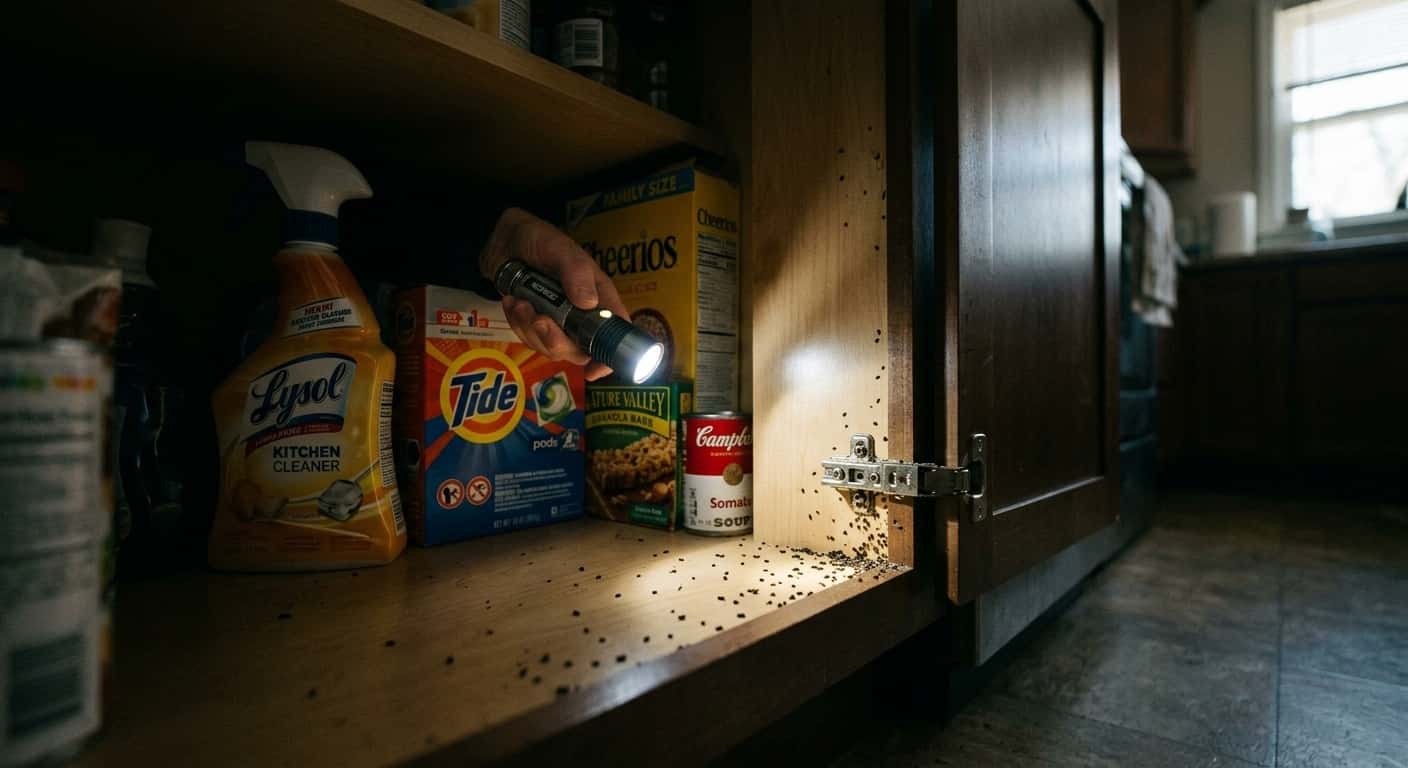
Finding pest droppings in one spot suggests a single pest passing through. Finding droppings in multiple rooms, behind appliances, in cabinets, and along baseboards tells you something very different. You have an established population with active travel routes throughout your home.
According to the National Pest Management Association, rodents invade approximately 21 million U.S. homes each winter and are estimated to cause 20-25% of all house fires of unknown origin due to electrical wire gnawing. A single mouse produces 50-75 droppings per day, meaning what looks like a small number of droppings can represent just hours of activity from a single animal, or a day from a much larger population.
How to identify droppings:
| Pest | Droppings Description | Size |
|---|---|---|
| Cockroach (German) | Small, dark, pepper-like specks | 1-2mm |
| Cockroach (American) | Ridged, cylindrical, dark brown | 2-3mm |
| Mouse | Small, dark pellets with pointed ends | 3-6mm |
| Roof rat | Spindle-shaped, shiny black, pointed | 12-13mm |
| Squirrel | Round, lighter brown pellets | 8-10mm |
If you’re finding droppings in your kitchen, bathroom, attic, and garage, you’re past the DIY stage.
If the droppings point to rodents, see our detailed guide on roof rats in your Florida attic for identification and next steps.
Sign 3: You Notice Structural Damage
Structural damage separates a nuisance from an emergency. When pests cause structural damage, the cost of waiting goes up every single day.
Structural damage that demands immediate professional attention:
- Gnaw marks on electrical wiring. Exposed wires in your attic or walls create immediate fire risk. Rodents cause millions in structure damage annually.
- Hollow-sounding wood. Tap baseboards, window frames, and door frames. Hollow sounds can indicate pest damage to internal wood.
- Sagging floors or ceilings. May indicate extensive hidden damage in framing members.
- Damaged insulation. Torn, compressed, or contaminated attic insulation means an active animal infestation and reduced energy efficiency.
- Holes in walls, soffits, or roof. Active entry points that need professional exclusion, not just patching.
What delayed treatment costs: In our experience, a homeowner who calls at the first sign of roof rats faces a straightforward trapping and exclusion job. A homeowner who waits 2-3 months until they hear constant scratching and find widespread droppings is looking at a significantly larger project including insulation replacement, wiring inspection, and multi-point exclusion. The rats are the same, the time is what makes the difference.
Sign 4: You’re Experiencing Health Symptoms
Pests don’t just damage your home. They affect your health. If anyone in your household is experiencing unexplained symptoms, pest exposure could be the cause.
Cockroach allergens are detected in 85% of inner-city U.S. homes, and cockroaches produce over 20 types of airborne allergens. Research shows that 60-80% of inner-city children with asthma are sensitized to cockroach allergens based on skin prick testing. The National Cooperative Inner-City Asthma Study found that children exposed to high cockroach allergen levels experienced more wheezing, missed school days, sleepless nights, and emergency medical visits.
Beyond allergens, cockroaches carry and spread at least 33 bacterial species (including E. coli and Salmonella), six types of parasitic worms, and other human pathogens. Rodent droppings and urine can trigger hantavirus, leptospirosis, and salmonellosis. These aren’t theoretical risks. They’re documented causes of illness in residential settings.
Call immediately if you notice:
- Increased asthma attacks or new respiratory symptoms, especially in children
- Unexplained skin rashes or bite marks (possible bed bugs, fleas, or mites)
- Allergic reactions with no obvious environmental trigger
- Flu-like symptoms after attic or crawl space exposure (possible rodent-borne illness)
- Gastrointestinal illness that could indicate food contamination from pest activity
When health is involved, professional pest elimination isn’t optional. It’s urgent. Contact Liberty Pest Management to schedule a same-day assessment.

For a deeper look at how pests affect your family’s well-being, read our post on understanding the health risks posed by common household pests.
Sign 5: You’ve Spotted Pest Activity During Daytime
Most household pests are nocturnal. Cockroaches, mice, rats, and many ant species prefer to forage in darkness when threats are minimal. If you’re seeing them during the day, the population has grown large enough that competition for food, water, and shelter forces some individuals out during non-preferred hours.
Daytime cockroach sightings in particular are a strong indicator of severe infestation. With 78-98% of urban homes harboring cockroaches and individual homes potentially hosting populations of 900 to 330,000, the ones you see represent a tiny fraction of the actual population.
The iceberg rule: For every cockroach you see, there are likely dozens you don’t. For every mouse sighting, assume 5-10 are hiding. Daytime sightings mean the hidden population is large enough to push individuals into the open.
Sign 6: You’ve Found Nesting Evidence
Nests confirm that pests aren’t just passing through. They’ve established a colony in your home. Common nesting signs include:
- Shredded paper, fabric, or insulation gathered in clusters (rodents)
- Mud tubes on foundations or walls (subterranean pest species)
- Wasp or hornet nests under eaves, in soffits, or behind shutters
- Ant mounds against your foundation or in wall voids
- Egg casings (cockroach oothecae, small, dark, capsule-shaped cases found behind appliances, in cabinets, and along crevices)
Nesting evidence means the population is reproducing in your home. A single German cockroach egg case contains 30-40 eggs. A single mouse litter produces 5-12 pups. Removing nests without treating the colony and sealing entry points accomplishes nothing. They rebuild within days.
If the nesting sounds are coming from larger animals, check out our guide on wildlife in your Tampa Bay home covering squirrels, raccoons, and other common intruders.
Sign 7: You Hear Sounds in Walls or Ceiling
Scratching, scurrying, gnawing, or thumping from inside walls, ceilings, or floors means something is living in your home’s structural cavities. The timing and character of the sounds help identify the pest:
| Sound Pattern | Time | Likely Pest |
|---|---|---|
| Fast scurrying, running | Night | Roof rats, mice |
| Running, jumping | Daytime (morning/evening) | Squirrels |
| Heavy thumping, scratching | Night | Raccoons, opossums |
| Fluttering, high-pitched chirping | Dusk | Bats |
| Faint scratching inside walls | Any time | Mice, German cockroaches (in wall voids) |
Sounds mean the pests have physical access to your wall and ceiling cavities. They’ve found entry points and established travel routes. DIY treatment can’t reach these areas effectively. Liberty Pest Management can locate entry points, determine the species, and apply targeted treatment within the structural spaces.
The sound you should worry about most: Silence after weeks of hearing activity. If scratching sounds suddenly stop, it could mean a rodent died inside the wall, which means an odor problem in 3-7 days, followed by a secondary fly infestation feeding on the remains. If sounds stop without confirmed trapping or removal, investigate immediately.

Sign 8: You’ve Discovered Bed Bugs
Bed bugs are the one pest where DIY treatment almost never works. They hide in mattress seams, box springs, headboard joints, electrical outlets, and even behind wallpaper. They can survive months without feeding and are resistant to most over-the-counter insecticides.
Why professionals are essential for bed bugs:
- Professional heat treatment (raising room temperature to 120-140 degrees F) kills all life stages in a single session
- Chemical treatment takes multiple targeted applications over 2-3 weeks
- Missing even a small cluster of eggs means the infestation returns within weeks
- Bed bugs spread between rooms and units. Improper DIY treatment often scatters them further
Bed bug treatment is among the most expensive pest services, with costs scaling significantly based on the extent of the infestation and treatment method. But the alternative (months of bites, lost sleep, and failed DIY attempts) costs more in health, stress, and ultimately in a larger professional bill.
Sign 9: The Problem Keeps Getting Worse
This sounds obvious, but it’s the most commonly ignored sign. If you’ve been managing a pest issue for weeks or months and the situation is escalating (more sightings, more droppings, more damage, more bites), DIY treatment is failing and the population is growing.
Pest populations don’t plateau. They grow exponentially until food, water, or space becomes limited. Every week of delay means:
- More breeding cycles completed (German cockroaches go from egg to adult in 50-60 days)
- More structural damage accumulating
- More contamination spreading through your home
- Higher professional treatment costs when you eventually call
A professional one-time treatment or quarterly prevention plan costs a fraction of what you’ll spend on an advanced infestation that’s had months to establish. The longer you wait, the more expensive the solution becomes.
When Should You Call Liberty Pest Management?
If any of the nine signs above apply to your situation, it’s time to call. Here’s what we handle every day:
Call Liberty Pest Management For:
- Recurring infestations that don’t respond to DIY treatment
- Rodents. Trapping is simple enough, but exclusion takes professional-level inspection.
- Cockroach populations. If you’re seeing multiple roaches regularly, the colony is established.
- Bed bugs. Always professional treatment.
- Stinging insect nests. Wasp, hornet, and yellow jacket nests near living areas.
- Any pest causing structural damage. Wiring damage, wood damage, insulation destruction.
- Wildlife. Raccoons, squirrels, bats, and armadillos need FWC-compliant removal in Florida.
- Health-related concerns. Asthma triggers, allergic reactions, disease risk.
What Should You Expect From a Professional Pest Control Visit?
Over 31,000 pest control businesses operate in the U.S., employing 167,232 specialists. With that many options, it helps to know what a quality service looks like.
A Good First Visit Includes:
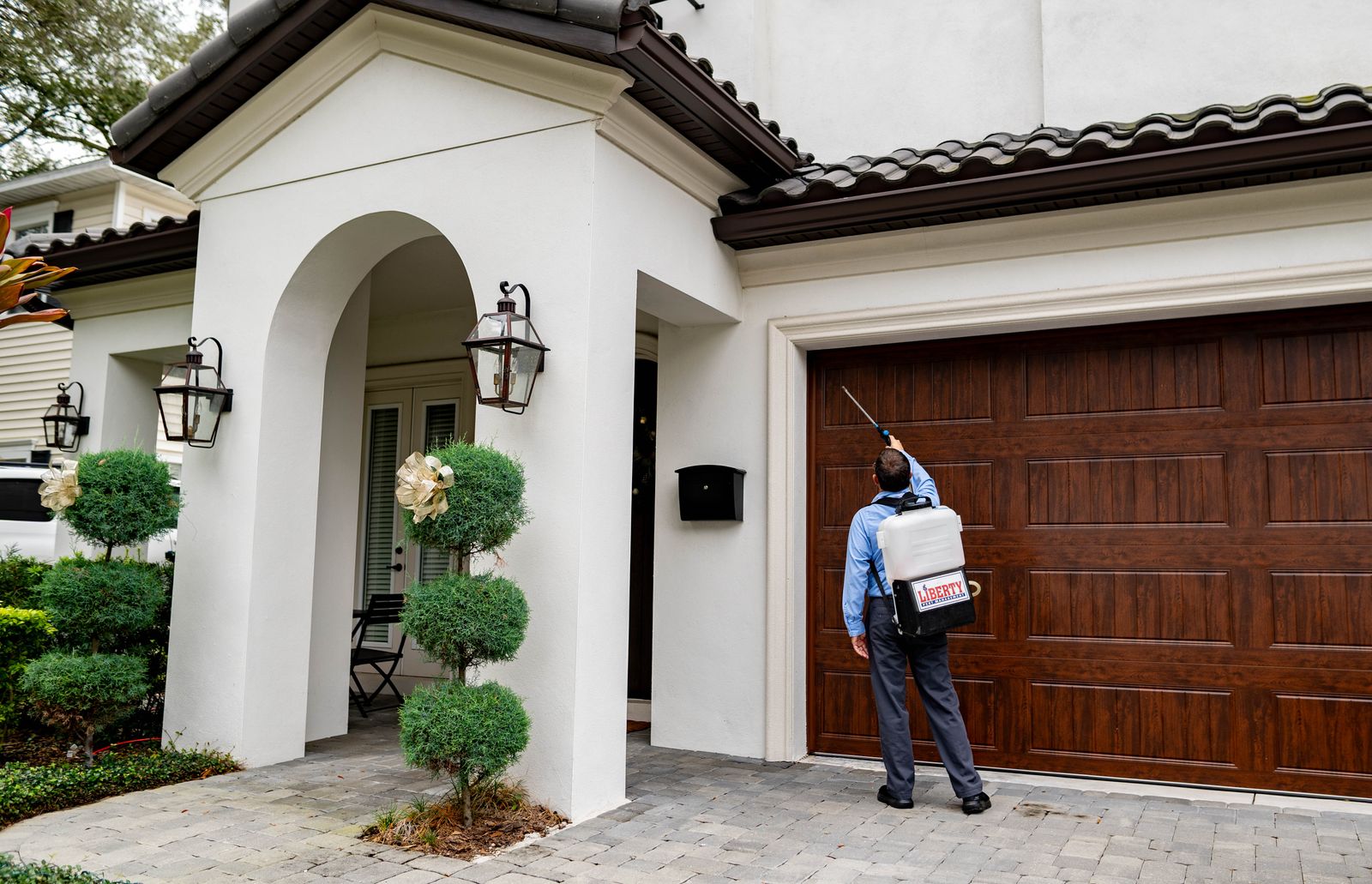
- Thorough inspection. Not just where you’ve seen pests, but your entire home’s exterior, attic, crawl space, kitchen, bathrooms, and garage. They should identify the species, locate entry points, and assess the infestation level.
- Species identification. Treatment varies dramatically by species. German cockroaches need different treatment than American cockroaches. Roof rats need different exclusion than Norway rats. Your provider should tell you exactly what you’re dealing with.
- Treatment plan explanation. What they’ll apply, where, how often, and what to expect. Ask about integrated pest management (IPM) methods that combine treatment with prevention.
- Entry point recommendations. Any quality provider will point out how pests are getting in and recommend exclusion work.
- Follow-up schedule. Most infestations take 2-3 treatments over several weeks. A one-and-done treatment rarely eliminates an established colony.
Red Flags to Watch For:
- Providers who “treat” without inspecting first
- Pressure to sign long-term contracts before diagnosing the problem
- Unwillingness to identify the specific pest species
- Claims that a single treatment will solve an established infestation
- No mention of entry points or prevention recommendations
In Florida, always verify that your pest control provider holds an active Florida Department of Agriculture license. For wildlife removal, they should also hold FWC Wildlife Management Personnel Certification.
Visit our services page to see the full range of pest control solutions Liberty Pest Management offers.
Frequently Asked Questions
How quickly should I call an exterminator after seeing pests?
For most pests, acting within the first week of repeated sightings produces the best outcomes. Professional integrated pest management can cut cockroach populations by 75% at three months and 88% at six months. Delays add breeding cycles, German cockroaches develop from egg to adult in 50-60 days, meaning a small population doubles or triples within two months.
Is professional pest control worth the cost?
Yes, for established infestations. Regular pest control visits and quarterly prevention plans cost a fraction of what you’d spend on remediation from an advanced infestation. Pest-related property damage costs billions annually in the U.S., and a single rodent infestation can mean expensive attic rewiring and insulation replacement. Prevention is always cheaper than remediation.
Can I use bug bombs or foggers instead of calling a pro?
Bug bombs (total-release foggers) are one of the least effective pest control methods available. They disperse insecticide into open air but don’t reach pests hiding in wall voids, behind appliances, under cabinets, or inside crevices, which is where 90%+ of cockroaches, ants, and other pests actually live. Studies show non-professionals misapply pest products more than twice as often as licensed technicians, increasing both health risk and treatment failure.
What’s the difference between an exterminator and a pest control technician?
Traditional exterminators focus on killing existing pests with chemical treatments. Modern pest control technicians practice integrated pest management (IPM), a combination of inspection, identification, targeted treatment, exclusion (sealing entry points), and prevention. IPM produces longer-lasting results because it addresses the root causes, not just the visible symptoms. Look for providers who emphasize inspection and exclusion alongside treatment.
How often should pest control be done in Florida?
In Florida’s warm, humid climate, quarterly professional treatment is the standard recommendation for most homes. Monthly service is recommended for homes with recurring cockroach or ant issues, or properties near wooded or marshy areas with heavy pest pressure.
Don’t Wait Until the Problem Gets Expensive
Every sign on this list has something in common: the longer you wait, the harder and more expensive the fix becomes. A minor ant issue becomes a wall void colony. A single mouse becomes a family of twelve. A few cockroach sightings become a population of hundreds hiding behind every appliance and inside every wall.
Professional pest control isn’t about admitting defeat on DIY. It’s about recognizing when a problem has crossed the line from manageable to established, and acting before it crosses the line from established to severe.
If you’re seeing any of these 9 signs:
- Call a licensed pest control provider for an inspection
- Ask about integrated pest management (IPM) rather than spray-only treatment
- Request a clear treatment plan with follow-up visits scheduled
- Get entry point recommendations to prevent recurrence
- In Florida, verify the provider’s Department of Agriculture license
One inspection. One treatment plan. One solution that actually lasts.
Schedule your free inspection with Liberty Pest Management and get the problem solved right.
Liberty Pest Management serves the Tampa Bay area including Odessa, Trinity, Land O’ Lakes, Wesley Chapel, and surrounding Pasco County communities. Licensed by the Florida Department of Agriculture (JB-151032). Call us at 813-961-2627 or get a free quote today.