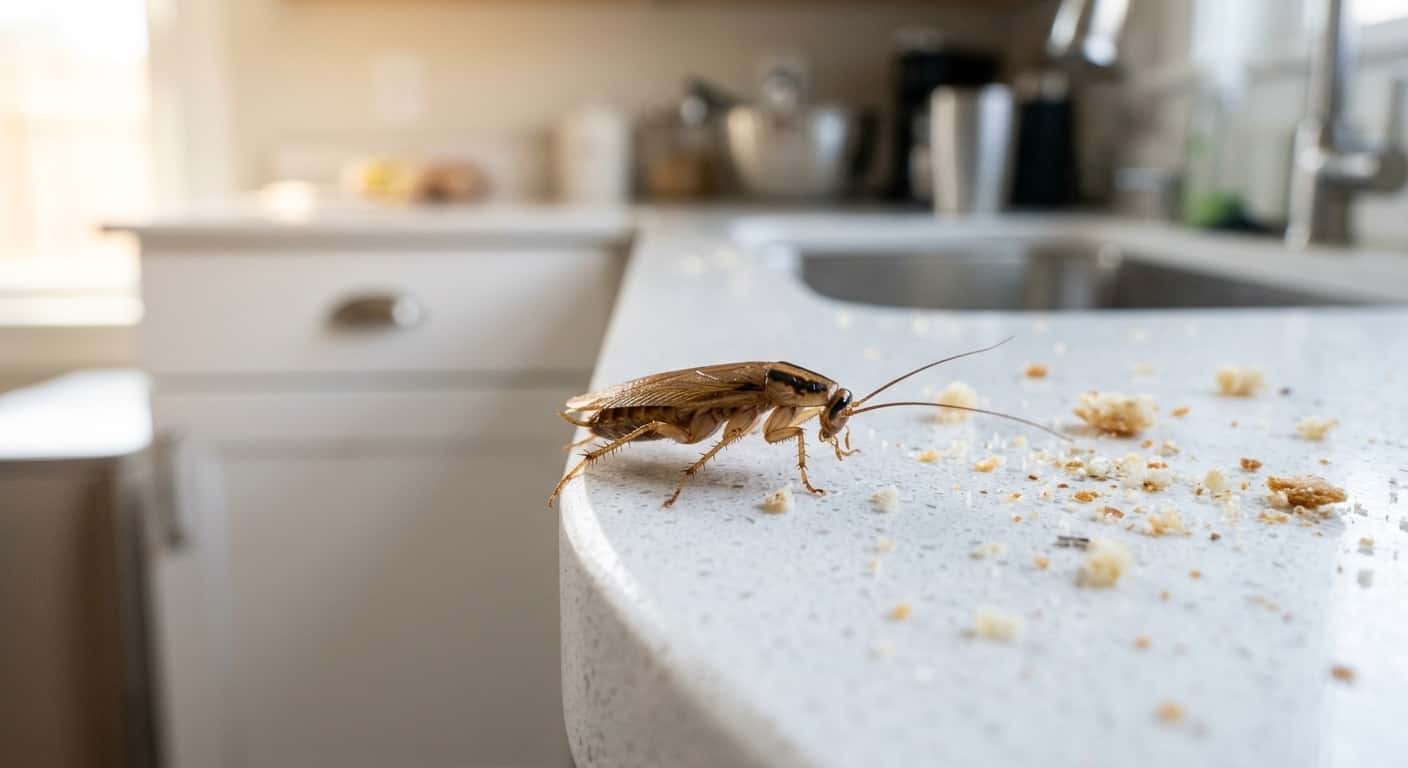
Palmetto bugs get the screams, but German cockroaches are the ones that should actually scare you. That small, light-brown roach you spotted darting behind your toaster isn’t a baby palmetto bug. It’s an entirely different species, and it’s far more difficult to eliminate.
A single female German cockroach and her offspring can produce over 30,000 descendants in a single year. They’re the fastest-breeding cockroach species. They live exclusively indoors, and Purdue University research found they’re developing cross-resistance to multiple insecticide classes simultaneously, making chemical-only treatment increasingly ineffective.
German cockroaches account for the majority of indoor cockroach infestations in U.S. homes, and Florida’s warm, humid climate makes the state a hotspot. If you’re seeing small roaches in your kitchen or bathroom, this guide will help you identify what you’re dealing with and eliminate them.
Key Takeaways
- German cockroaches breed faster than any common species, egg to breeding adult in as few as 100 days, with 30-48 eggs per capsule
- They live exclusively indoors and don’t wander in from outside like palmetto bugs
- Purdue research shows German cockroaches developing cross-resistance to insecticides they’ve never been exposed to
- Gel bait + IGR (insect growth regulator) is the most effective treatment, research shows 80%+ mortality within 14 days
How Do You Tell German Cockroaches Apart From Palmetto Bugs?
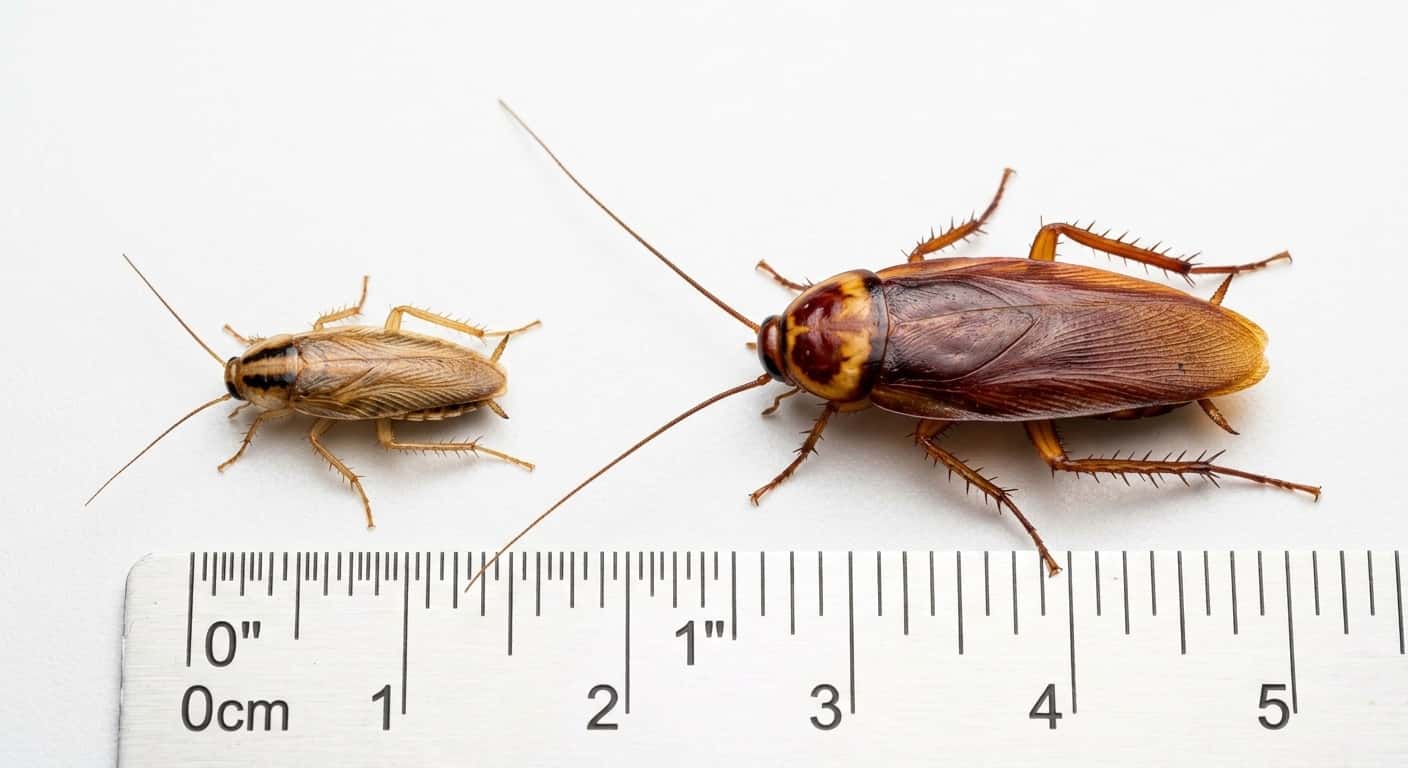
The distinction matters because the treatment is completely different. German cockroaches need aggressive indoor treatment. Palmetto bugs (American cockroaches) primarily need exterior exclusion. Treating one like the other wastes time and money.
German Cockroach Identification
- Size: Half to five-eighths inch long, much smaller than palmetto bugs
- Color: Light brown to tan
- Markings: Two dark, parallel stripes running from behind the head to the base of the wings, the signature identification feature
- Wings: Present but they rarely fly (they run instead, fast)
- Habitat: Strictly indoor. Kitchens, bathrooms, and areas near food and moisture. You’ll never find a German cockroach living outside in Florida.
Palmetto Bug (American Cockroach) Comparison
- Size: 1.5-2 inches, 3-4x larger
- Color: Reddish-brown
- Markings: Yellow shield behind the head
- Wings: Fully developed, capable of short flights
- Habitat: Primarily outdoor, sewers, mulch, trees. Wanders indoors occasionally.
Why This Matters for Treatment
German cockroaches are indoor colonizers. They don’t have an outdoor population to manage. The entire infestation exists inside your walls, behind your appliances, and under your cabinets. Perimeter spraying around your home’s exterior does nothing against them. They need targeted interior treatment focused on harborage areas.
UF/IFAS identifies seven cockroach species common in Florida homes, and German cockroaches are the only strictly indoor species requiring fundamentally different management than the larger outdoor species.
For a deeper look at the larger species, read our complete guide on how to get rid of palmetto bugs in Florida.
Why Are German Cockroaches So Hard to Get Rid Of?
German cockroaches are the most successful indoor pest in the world. No exaggeration. They’ve colonized every inhabited continent. Understanding why they’re so persistent helps you understand why the right treatment matters.
Explosive Reproduction
German cockroaches breed faster than any common cockroach species. Each female produces 4-8 egg capsules (oothecae) in her lifetime, with each capsule containing 30-48 eggs. The eggs incubate for only 20-30 days before hatching. Nymphs reach breeding age in 40-125 days depending on conditions.
In Florida’s warm indoor environments, particularly behind refrigerators and near dishwashers where temperatures stay above 77 degrees, the cycle accelerates. A single mated female can produce over 200 offspring directly. Those offspring begin breeding within months. After a year, the math produces over 30,000 descendants from a single starting pair.
The German cockroach’s unique reproductive strategy contributes to its dominance as an indoor pest: females carry the egg capsule attached to their abdomen until two days before hatching, then deposit it in a hidden, protected location. This behavior means the eggs are protected from predators and pesticide exposure during their entire 28-day incubation period.
Insecticide Resistance
The most alarming part is the resistance. Purdue University research published in Scientific Reports found that German cockroaches can develop cross-resistance to insecticide classes they’ve never been exposed to. Cockroaches that survived treatment with one insecticide, and their offspring, gained resistance not only to that chemical but to other classes of insecticide as well.
The researchers tested three methods over six months:
- Rotating three insecticides from different classes
- Using a mixture of two insecticides from different classes
- Using a single insecticide for the entire period
In some cases, the cockroach population actually increased during treatment because resistance developed faster than the chemicals could kill. The study concluded that chemical-only methods are becoming unreliable for German cockroach control.
Hiding Behavior
German cockroaches are thigmotactic. They prefer tight spaces where their body contacts surfaces on multiple sides. They squeeze into cracks as thin as a credit card. During the day, they’re hidden in:
- Gaps behind refrigerators and stoves
- Inside the motor housing of refrigerators
- Behind dishwasher kick plates
- Inside wall outlets and switch plates
- Under sink cabinets near plumbing penetrations
- Inside microwave and toaster oven vents
- Behind baseboards and crown molding
- Inside the hinges and edges of cabinets
You see maybe 1-5% of the actual population during a daytime sighting. The other 95%+ is hidden.
What Florida technicians see that homeowners don’t: When we pull a refrigerator away from the wall during a German cockroach inspection in a Tampa Bay kitchen, the reaction is almost always the same, the homeowner had no idea how many were living back there. The warm motor, condensation from the drip pan, and food crumbs create a perfect microhabitat. We’ve found hundreds of cockroaches behind a single refrigerator in homes where the homeowner was only seeing “a few” in the kitchen at night.
What Health Risks Do German Cockroaches Cause?
German cockroaches are a documented public health hazard, not just a gross nuisance. Their impact on indoor air quality and disease transmission is well established in medical literature.
Allergens and Asthma
Researchers detect cockroach allergens in 85% of inner-city U.S. homes. German cockroaches produce over 20 types of airborne allergens through their feces, shed skins, saliva, and body parts. These allergens accumulate in household dust and become airborne when disturbed.
The connection to asthma is strong: 60-80% of inner-city children with asthma show sensitization to cockroach allergens. The National Cooperative Inner-City Asthma Study found that children with both cockroach sensitivity and high allergen exposure experienced significantly more wheezing, missed school days, and emergency medical visits.
Disease Transmission
Cockroaches have been implicated in spreading 33 kinds of bacteria including E. coli and Salmonella, six parasitic worms, and more than seven other human pathogens. German cockroaches are particularly concerning because they live in kitchens, directly contaminating food preparation surfaces, utensils, and stored food.
Contamination Pathway
German cockroaches travel between garbage, drains, and food surfaces. They regurgitate digestive fluid onto food, leave droppings on surfaces, and shed allergen-laden skin as they grow. A kitchen with an active German cockroach infestation has contaminated food contact surfaces, even when it looks clean to the naked eye.
To understand the full scope of pest-related health concerns, read our post on understanding the health risks posed by common household pests.
What’s the Most Effective Treatment for German Cockroaches?
UF/IFAS identifies gel baits and insect growth regulators (IGRs) as the preferred chemical management options for German cockroaches. Research confirms that professional-grade gel baits achieve over 80% mortality within 14 days, including against field-collected populations with some existing resistance.
According to UF/IFAS assessment-based pest management guidelines, the preferred treatment for German cockroaches combines gel baits with insect growth regulators, as this method decreases the probability of unnecessary pesticide exposure compared to surface sprays while delivering superior long-term population control. In field studies, gel-bait treatment controlled populations within 2-3 months and maintained zero or near-zero levels for over a year.
The Professional Treatment Protocol
Phase 1: Inspection and Assessment
Before any treatment, a thorough inspection identifies:
- The species (confirming German cockroaches vs. other species)
- The severity (light, moderate, or heavy infestation)
- Harborage locations (where they’re hiding)
- Contributing conditions (moisture sources, food access, entry points between units)
Phase 2: Gel Bait Application
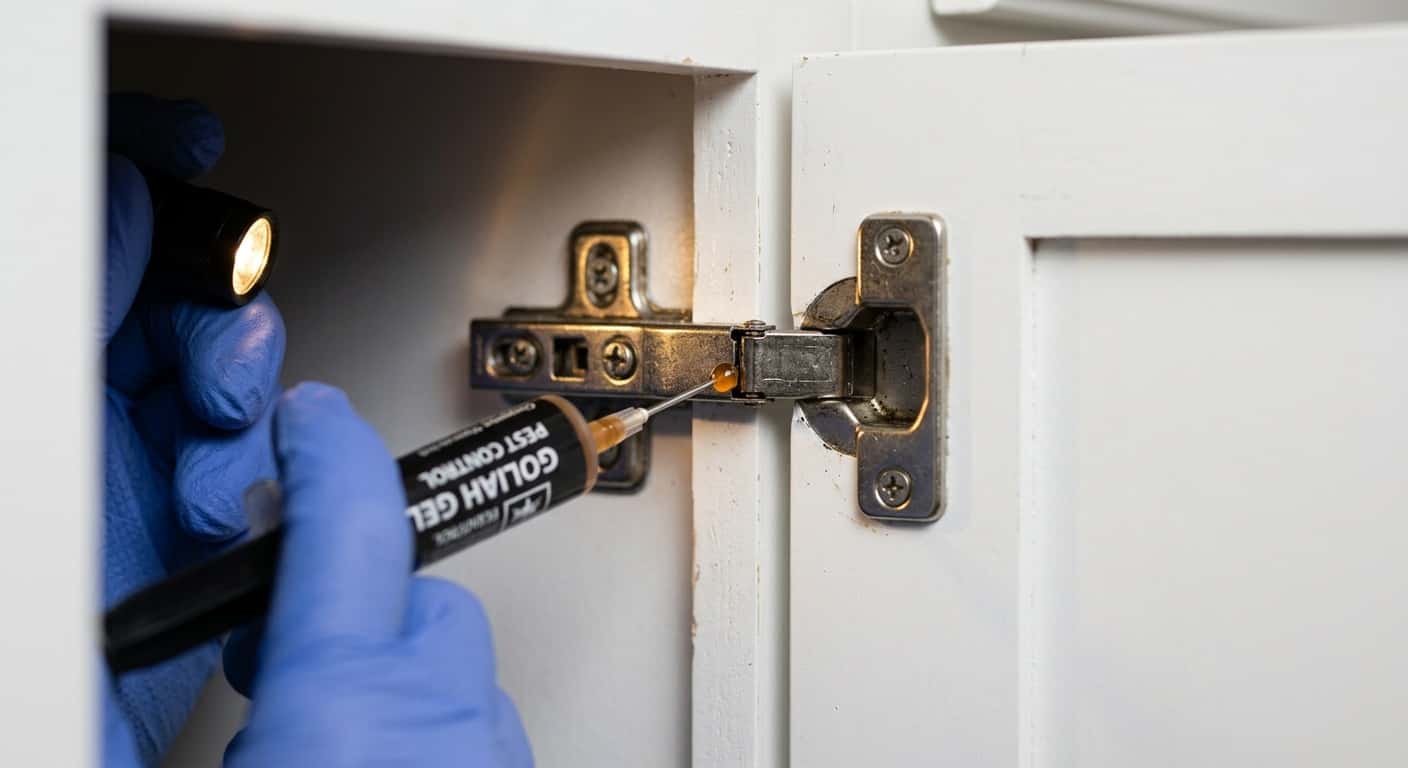
Professional gel bait is applied in precise, small dots throughout cockroach harborage areas in the kitchen and bathrooms. The bait works through a cascading kill effect: cockroaches eat the bait, return to their harborage, and die. Other cockroaches consume the dead cockroach’s body and feces, which still contain the active ingredient, and die in turn. This cascade reaches cockroaches deep in wall voids that no spray could ever penetrate.
Placement depends on detailed knowledge of German cockroach behavior patterns, specifically where they shelter during the day, the routes they travel at night, and how they interact with kitchen and bathroom infrastructure. Incorrect placement wastes product and leaves the heaviest harborage areas untreated. Professional experience makes the difference: a trained technician knows where cockroaches hide based on species behavior, not guesswork.
Phase 3: Insect Growth Regulator (IGR)
IGRs don’t kill adult cockroaches. They prevent nymphs from developing into breeding adults. Applied alongside gel bait, IGRs break the reproductive cycle from both ends: the gel bait eliminates adults, while the IGR ensures nymphs never reach breeding age. The population collapses because new adults aren’t replacing the ones being killed. Proper IGR application means knowing where nymphs concentrate, which differs from adult harborage patterns.
Phase 4: Follow-Up (Critical)
German cockroach treatment is never one-and-done. Follow-up visits at 2, 4, and 8 weeks after initial treatment are essential to:
- Refresh gel bait placements
- Treat newly hatched nymphs from eggs that survived initial treatment
- Assess population reduction and adjust strategy
- Address any remaining harborage areas
What NOT to Do
- Don’t spray over-the-counter insecticide. Surface sprays repel cockroaches away from bait stations, scatter them into new areas, and accelerate insecticide resistance. Purdue research shows this can actually increase populations.
- Don’t use bug bombs/foggers. Foggers don’t penetrate the cracks where German cockroaches hide. They contaminate food surfaces, trigger resistance, and scatter cockroaches into adjacent rooms or apartments.
- Don’t rely on over-the-counter powders alone. Some supplemental products exist, but they work far too slowly to control an active German cockroach infestation on their own.
Why spray-only treatment fails and actually makes things worse: The Purdue University study is the clearest evidence: when you spray German cockroaches with insecticide, the survivors develop resistance, and pass that resistance to offspring who’ve never been exposed. Worse, they develop cross-resistance to other chemical classes. Every time you spray and fail, you’re making the next treatment less effective. Gel bait avoids this cycle because cockroaches actively seek out and consume the product rather than being repelled by it.
How Do You Prevent German Cockroaches in Your Florida Home?
Prevention is harder with German cockroaches than with palmetto bugs because they don’t enter from outside. They’re brought in. Understanding how they arrive is the first step in keeping them out.
How German Cockroaches Enter Your Home
German cockroaches don’t crawl in from your yard. They hitchhike:
- Grocery bags and cardboard boxes. Egg capsules and live cockroaches hide in corrugated cardboard folds and paper bags
- Used appliances and furniture. Buying a used microwave, toaster, or piece of furniture from an infested home brings cockroaches directly into yours
- Deliveries. Shipping boxes that sat in infested warehouses can carry egg capsules
- Visitors’ belongings. Backpacks, purses, and grocery totes from infested environments
- Multi-unit buildings. In apartments and condos, German cockroaches travel between units through shared plumbing, electrical conduits, and wall voids
Kitchen Prevention
- Eliminate moisture. Fix every leak. Wipe condensation under sinks. German cockroaches survive only 12 days without water but 42 days with water alone. Removing water is more impactful than removing food.
- Clean behind appliances quarterly. Pull out the refrigerator and stove. Clean grease, crumbs, and moisture. The single most important cleaning task for cockroach prevention.
- Wipe down counters nightly. Every crumb is a meal for a cockroach population
- Empty garbage daily. Use bins with tight-fitting lids
- Store food in sealed containers. Glass or heavy plastic with secure lids. Never leave open boxes or bags in the pantry.
- Run the dishwasher before bed. Don’t leave dirty dishes overnight. Cockroaches forage between midnight and dawn.
- Eliminate clutter. Cardboard boxes, paper bags, and stacked newspapers provide harborage. Recycle promptly.
Inspection Habits
- Check grocery bags before storing items, look for small brown cockroaches or tiny dark droppings
- Inspect used appliances and furniture thoroughly before bringing them inside
- Check behind appliances monthly with a flashlight, look for droppings (small, dark, pepper-like specks), shed skins, and egg capsules
- In apartments, inspect along shared walls and around plumbing penetrations under sinks
For seasonal exclusion tips, see our guide on how to pest-proof your home for each season.
When Should You Call a Professional for German Cockroaches?
German cockroaches are one pest where professional treatment almost always outperforms DIY. The combination of rapid reproduction, hidden harborage, and insecticide resistance makes them extremely difficult to eliminate without the right products, equipment, and follow-up schedule.
Call a professional immediately if:
- You see small, light-brown cockroaches with parallel stripes in your kitchen or bathroom, don’t wait to see if it’s “just one”
- You find droppings (dark specks resembling ground pepper) in cabinets, on counters, or behind appliances
- You discover egg capsules, small, light-brown, purse-shaped cases about 1/4 inch long
- You see cockroaches during the day, daytime sightings mean a severe population
- You’ve sprayed with over-the-counter products and the problem is getting worse, you may be accelerating resistance
- You live in a multi-unit building, treatment must be coordinated across adjacent units to prevent cockroaches from simply moving to a neighbor’s apartment and returning later
Professional German cockroach treatment typically takes 3-4 follow-up visits over 6-8 weeks for complete elimination. Quarterly prevention plans include ongoing monitoring and treatment to prevent reinfestations. Contact Liberty Pest Management for a free inspection and quote.
Frequently Asked Questions
Can a single German cockroach start an infestation?
Yes, if it’s a mated female. A single pregnant female carries an egg capsule containing 30-48 eggs. Those eggs hatch in 20-30 days, and the nymphs reach breeding age in 40-125 days. Within a year, that one female’s lineage can produce over 30,000 descendants. Even a single German cockroach warrants action. The colony may already be establishing.
Why do I see German cockroaches at night but not during the day?
German cockroaches are nocturnal. They hide in tight cracks and crevices during daylight and forage between midnight and dawn. You’re seeing perhaps 1-5% of the actual population. If you start seeing German cockroaches during the day, it indicates the population has grown so large that competition for food and harborage forces some individuals into the open during non-preferred hours. Daytime sightings signal a severe infestation.
Do German cockroaches fly?
German cockroaches have wings but rarely fly. They may glide short distances when disturbed or drop from elevated surfaces, but they primarily run, and they run fast. If you see a large cockroach flying in your Florida home, it’s almost certainly an American cockroach (palmetto bug), not a German cockroach.
Why isn’t my spray working on German cockroaches?
Purdue University research found that German cockroaches develop cross-resistance to insecticides they’ve never been exposed to. Survivors of spray treatment pass resistance to their offspring, making future treatments less effective. Sprays also repel cockroaches away from the treatment area without killing them, scattering them into new rooms and making the infestation harder to contain. Gel bait is the preferred alternative because cockroaches actively consume it.
How long does it take to get rid of German cockroaches?
With professional gel bait and IGR treatment, populations are typically controlled within 2-3 months, with zero or near-zero levels maintained for over a year with follow-up. Expect 3-4 treatment visits over 6-8 weeks. Severe infestations in multi-unit buildings may take longer because adjacent units must be treated simultaneously. Without coordinated treatment, cockroaches cycle between units indefinitely.
Ready to eliminate German cockroaches from your home? Get a free quote from Liberty Pest Management today.
Don’t Give German Cockroaches Time to Multiply
Every day you wait is a day the population grows. German cockroaches breed faster than any other species, hide where you can’t see them, and survive treatments that kill other pests. The one advantage you have is timing, a small population caught early is a straightforward treatment. A large population that’s had months to establish and develop resistance is a much longer, more expensive battle.
If you’ve spotted a German cockroach in your kitchen:
- Don’t spray. It makes things worse
- Clean behind the refrigerator and stove immediately
- Fix any moisture sources under sinks
- Store all food in sealed containers
- Call Liberty Pest Management for a gel bait and IGR treatment plan
- Expect 3-4 follow-up visits over 6-8 weeks
The small roach with two stripes is a bigger problem than the large one that flies at your face. Treat it accordingly.
Schedule a free inspection with Liberty Pest Management to get started on a treatment plan.
Liberty Pest Management serves the Tampa Bay area including Odessa, Trinity, Land O’ Lakes, Wesley Chapel, and surrounding Pasco County communities. Licensed by the Florida Department of Agriculture (JB-151032). Call us at 813-961-2627 or get a free quote today.