Tampa Bay is one of the most mosquito-dense metro areas in Florida, and the problem is getting worse. More than 40 mosquito species live in Hillsborough County alone, and locally acquired dengue cases in Florida have more than tripled over the past five years, from roughly 100 cases between 2010-2018 to over 400 between 2019-2024.
In 2025, Pasco County reported 13 locally acquired dengue cases alongside 11 travel-related cases. Not Miami or the Keys. Our backyard. Hillsborough County also recorded locally acquired dengue cases for the first time in recent years.
Mosquitoes are a public health threat in Tampa Bay, not just a backyard annoyance. They demand a real strategy, not just citronella candles and hope. What follows: when mosquitoes are active, what diseases they carry, and exactly how to protect your property and family.
Key Takeaways
- Over 40 mosquito species inhabit Hillsborough County, with 90 species statewide
- Locally acquired dengue cases in Florida tripled over the past 5 years, with Pasco County reporting 13 local cases in 2025
- Mosquito eggs hatch in 24-48 hours, and larvae become biting adults in as few as 3-5 days during summer
- Professional barrier treatments repel up to 90% of mosquitoes for 3-4 weeks per application
When Is Mosquito Season in Tampa Bay?
Peak mosquito season in Tampa Bay runs June through October, aligning with Florida’s rainy season. But in Tampa Bay’s subtropical climate, mosquito activity starts as early as March and doesn’t fully subside until December, giving us roughly 8-9 months of active mosquito pressure.
Monthly Activity Timeline
| Month | Activity Level | What’s Happening |
|---|---|---|
| Jan-Feb | Low | Minimal activity; cold snaps suppress breeding |
| March | Rising | Season begins; early broods emerging |
| April-May | Moderate | Populations building; rain events trigger breeding |
| June-August | Peak | Rainy season; daily storms create standing water everywhere |
| September-October | Peak-High | Hurricane season compounds breeding; highest disease risk |
| November | Declining | Activity drops with cooler nights |
| December | Low | Season winding down, but warm spells trigger brief surges |
When Do Mosquitoes Bite?
Not all mosquitoes bite at the same time. Tampa Bay hosts species with different activity patterns:
- Dawn and dusk biters: Culex species (primary West Nile virus vectors), most active at twilight
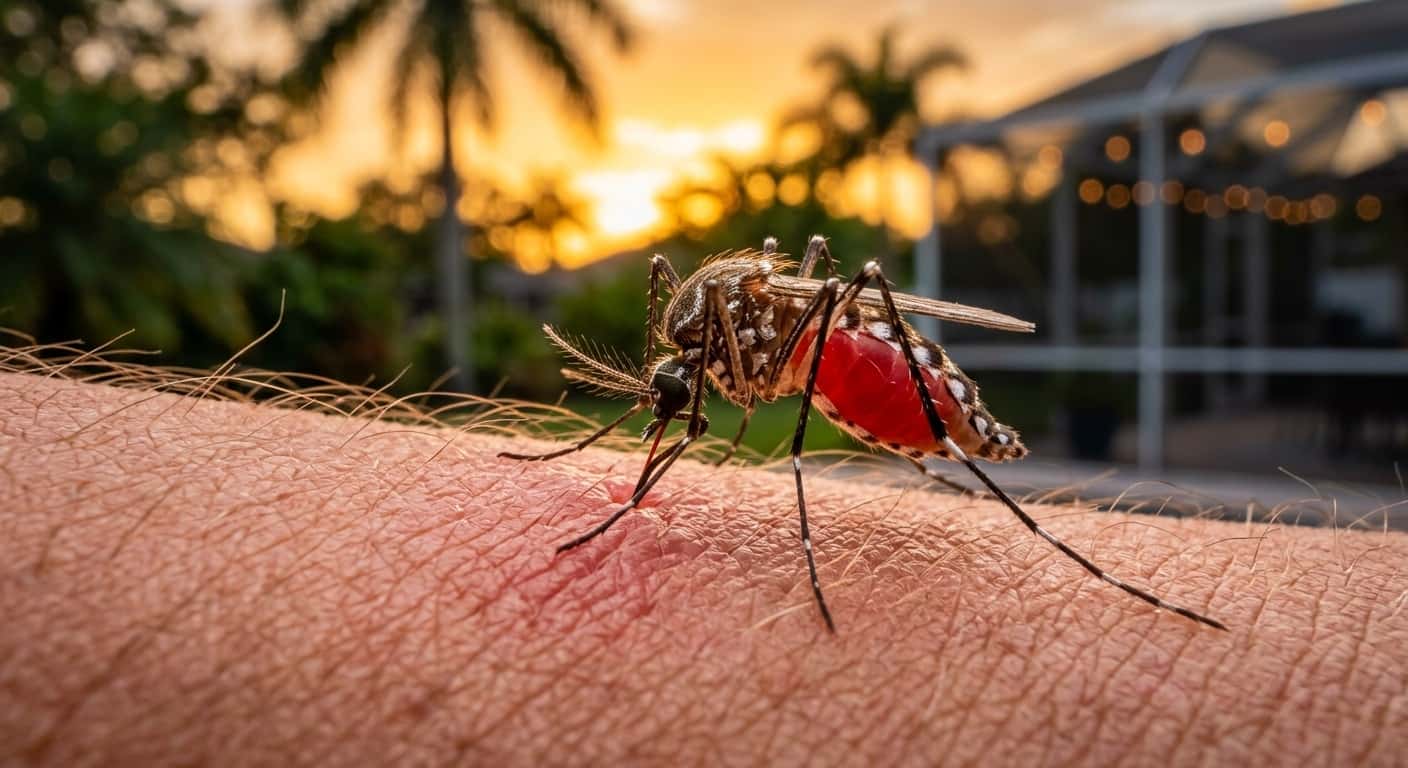
- Daytime biters: Aedes aegypti and Aedes albopictus (dengue, Zika, chikungunya vectors), aggressive in early morning and late afternoon
- Nighttime biters: Some Culex species continue feeding after dark
The practical takeaway: you can get bitten at any time of day during peak season. Dawn, dusk, and shaded areas during the day carry the highest risk.
During Florida’s summer months, a mosquito can develop from egg to biting adult in as few as 3-5 days, compared to over a week during winter. This accelerated development cycle means that every rainstorm that creates standing water produces a new generation of biting mosquitoes within the same week.
What Diseases Do Tampa Bay Mosquitoes Carry?
None of this is hypothetical. Tampa Bay has active mosquito-borne disease transmission. Florida’s Department of Health maintains surveillance across all counties, and the numbers show why mosquito control matters.
Dengue Fever
The biggest emerging threat. Florida recorded 49 locally acquired dengue cases in 2025, with cases in Hillsborough and Pasco counties, the Tampa Bay area. Statewide, 429 travel-associated dengue cases were also reported in 2025. Dengue causes high fever, severe headache, joint and muscle pain, and in rare cases, hemorrhagic symptoms requiring hospitalization.
Dengue is spread by Aedes aegypti and Aedes albopictus, both daytime-biting species that breed in small containers of water. A flower pot saucer or bottle cap holds enough water for these mosquitoes to lay eggs.
West Nile Virus
Florida reported six human West Nile virus cases in 2025, along with 402 positive sentinel chicken samples statewide. West Nile is spread primarily by Culex mosquitoes, which breed in larger bodies of standing water, ditches, storm drains, and neglected pools. Most infections are asymptomatic, but severe cases can cause neurological damage.
Chikungunya
Florida reported 370 travel-associated chikungunya cases in 2025 and one locally acquired case in Miami-Dade with onset in December 2025. Chikungunya causes severe joint pain that can persist for months.
Eastern Equine Encephalitis (EEE)
Rare but severe. EEE has a 30% fatality rate in humans and causes permanent neurological damage in many survivors. Florida monitors for EEE through sentinel chicken programs, Pinellas County alone maintains 104 sentinel hens across 8 locations.
Why dengue is different from what we’ve seen before: For decades, mosquito-borne disease in Tampa Bay meant West Nile virus, a threat, but one carried by nighttime-biting Culex mosquitoes that most people can avoid. Dengue changes the equation because it’s transmitted by Aedes mosquitoes that bite during the day, in your backyard, while you’re grilling or your kids are playing. The tripling of dengue cases in Florida over five years signals that this daytime threat is establishing in our area.
Hurricanes can also make mosquito problems significantly worse. Learn more in our guide on hurricane season pest problems in Tampa Bay.
How Do You Eliminate Mosquito Breeding on Your Property?
The CDC’s recommendation hasn’t changed: eliminate standing water at least once per week. During rainy season, once per week isn’t enough, aim for every time it rains.
The Standing Water Audit
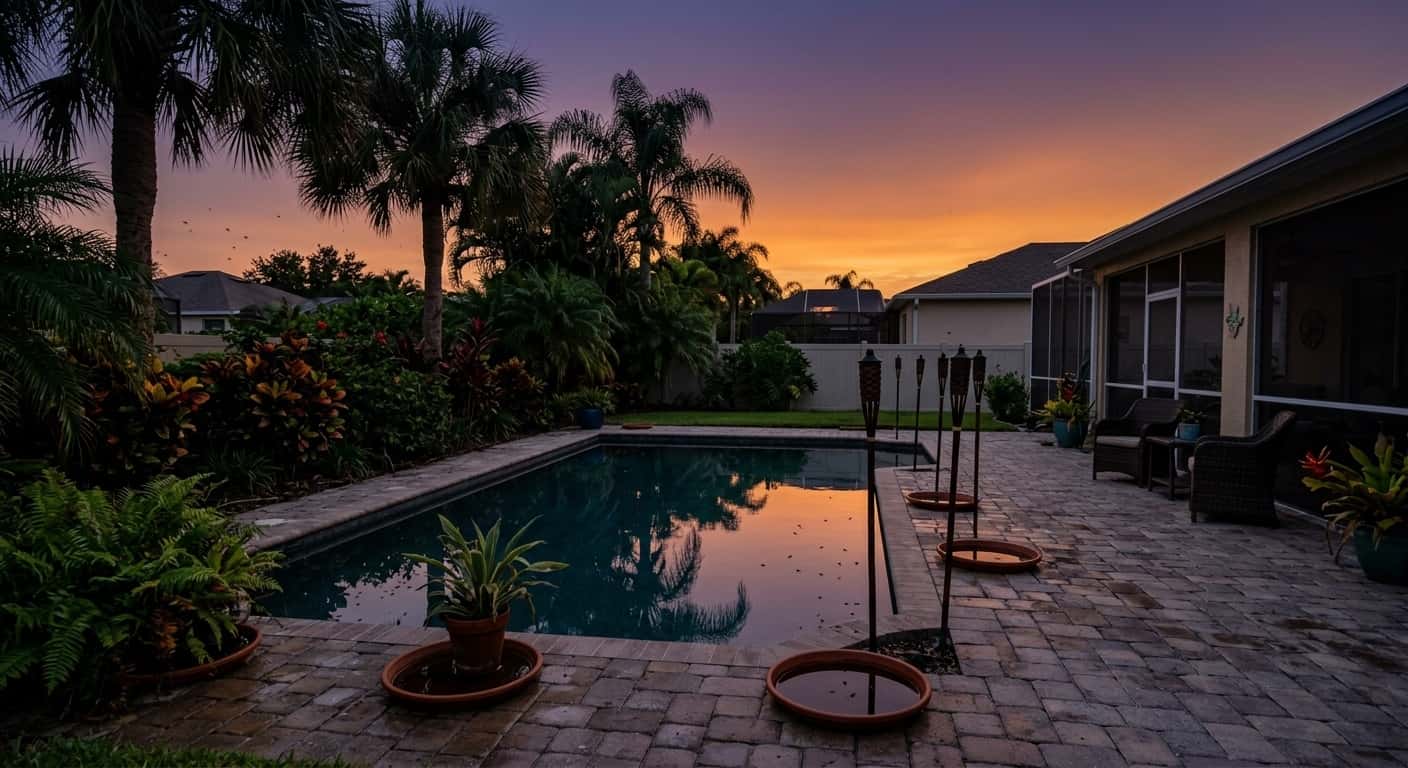
Walk your entire property and check every item that holds water. Mosquito eggs need as little as a bottle cap of water. The complete checklist:
Obvious sources:
- Birdbaths (change water every 2-3 days)
- Plant saucers under potted plants
- Pet water bowls left outdoors
- Rain barrels without screens
- Kiddie pools and toys
- Wheelbarrows and buckets
Overlooked sources:
- Clogged gutters and downspouts (the #1 overlooked breeding site)
- Grill covers and tarp folds that hold water
- Pool covers, even small puddles on the cover breed mosquitoes
- Trash can lids and recycling bins
- AC drip pans and condensate lines
- Corrugated drainage pipe ends
- Tire swings and stored tires
- Bromeliads and other plants that hold water in their leaves
- Fence post caps and hollow fence rails
Permanent Water Features
Ponds, fountains, and ornamental water features don’t need to be removed. They need to be managed:
- Larvicide treatment. Professional larvicide applications prevent mosquito larvae from developing in water you can’t drain. These treatments last up to 30 days and are safe for fish, pets, and wildlife. Liberty Pest Management can assess your water features and recommend the right treatment.
- Water movement. Fountains and aerators keep water moving. Mosquitoes lay eggs in still water, so circulation discourages breeding.
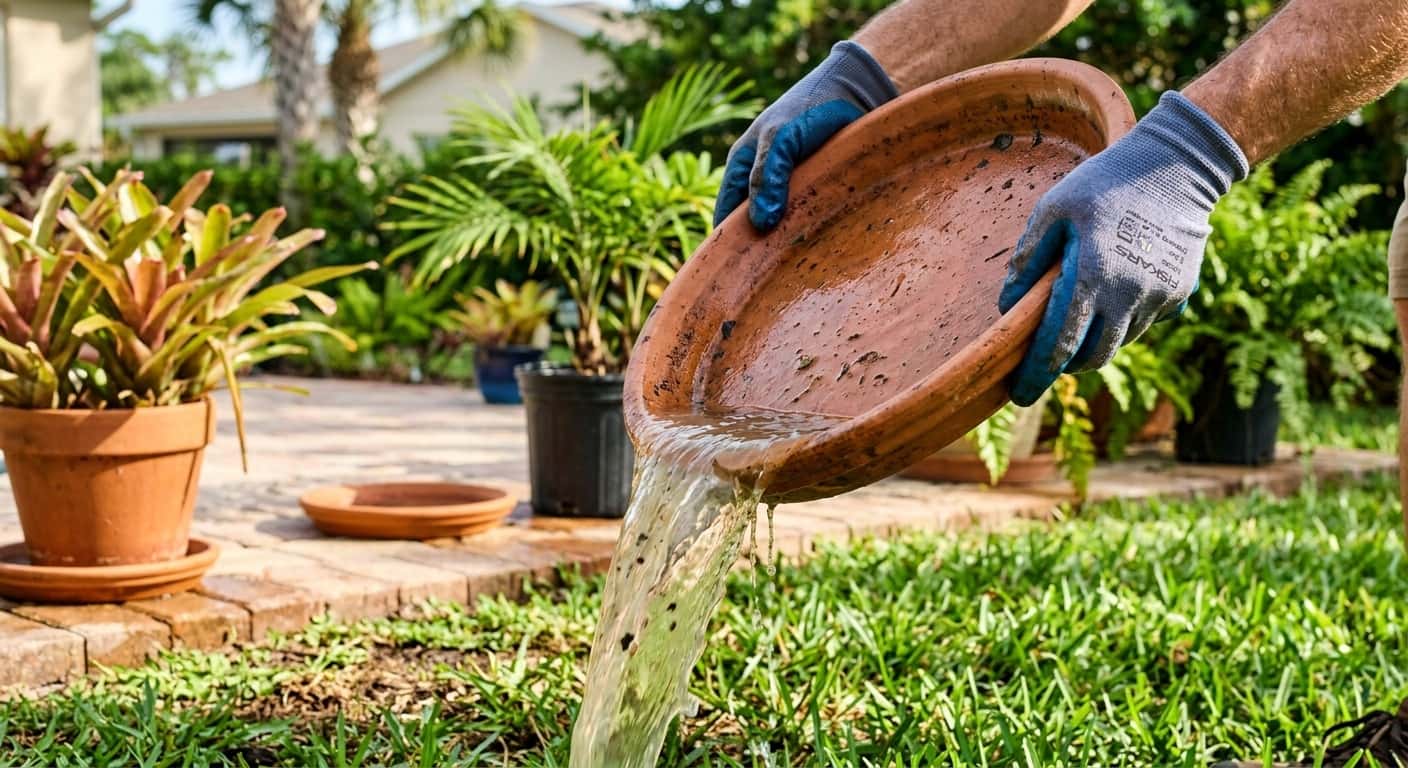
County mosquito control programs handle surveillance and treatment across public spaces, but they don’t treat individual residential properties. Controlling breeding on your own property is the homeowner’s responsibility, and that’s where professional residential mosquito treatment makes the biggest difference.
For more tips on reducing pest pressure around your property, check out our guide on how to keep pests out of your Florida home this summer.
What Are the Best Mosquito Treatment Options for Tampa Bay Yards?
Once you’ve eliminated breeding sites, treatment targets adult mosquitoes resting in your vegetation. Some options work. Most don’t.
Professional Barrier Treatments (Most Effective)
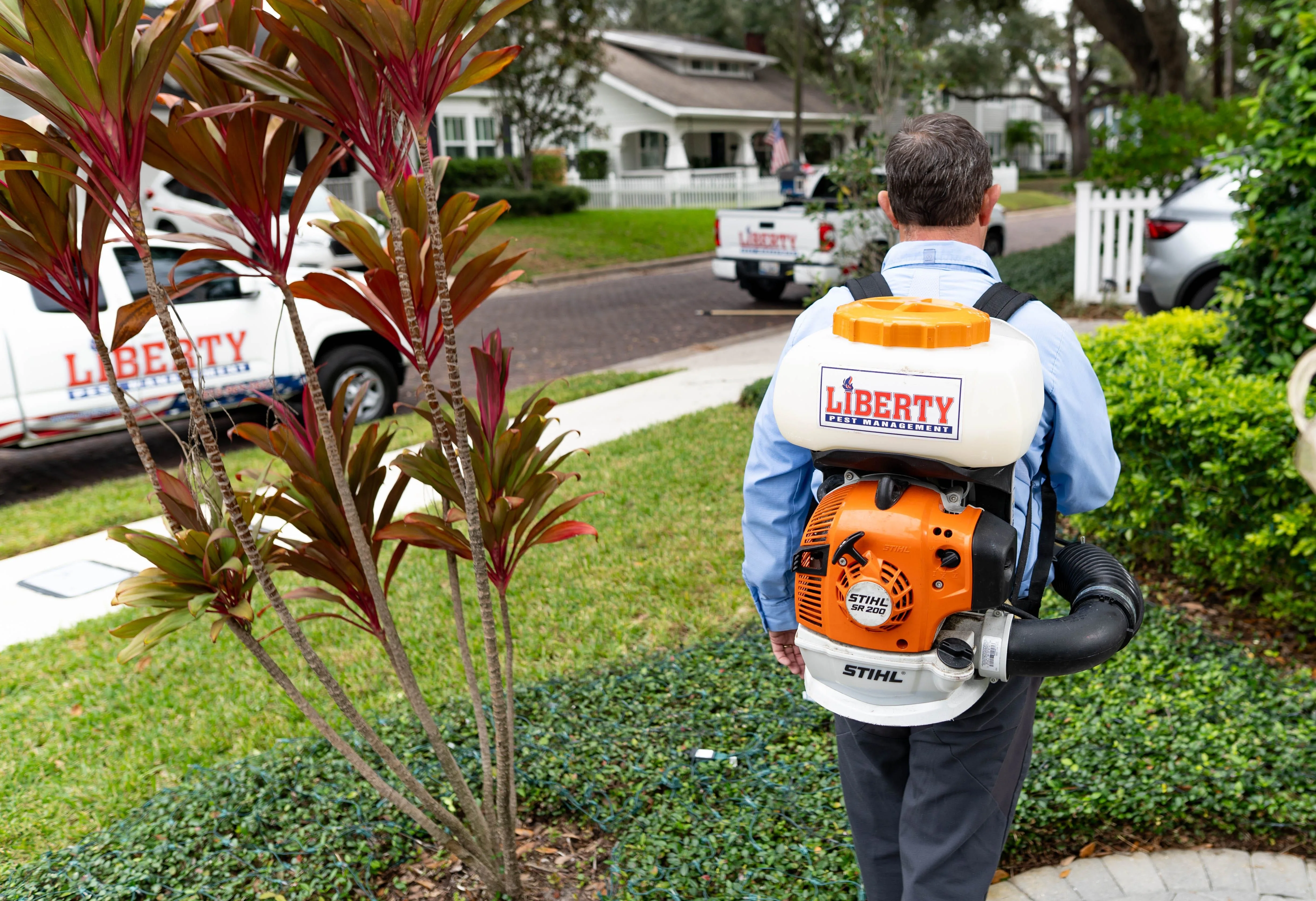
Professional barrier sprays target the vegetation, shaded areas, and structures where adult mosquitoes rest between blood meals. A review spanning 74 years of research found that barrier treatments effectively lower mosquito populations across multiple species and insecticide types.
How they work:
- A technician sprays a residual insecticide on the undersides of leaves, shrubs, fence lines, under decks, and around entry points
- The treatment repels up to 90% of mosquitoes and remains effective for 3-4 weeks
- Applications are scheduled every 21-30 days during peak season
Service options:
- One-time yard spray for immediate relief
- Monthly service during peak season (April-October)
- Seasonal packages covering the full mosquito season
- Year-round monthly protection plans
Contact Liberty Pest Management for current pricing and a free yard assessment.
Misting Systems
Automated misting systems installed around your property’s perimeter release insecticide on a timed schedule (typically at dawn and dusk). They provide hands-off protection but need professional installation and ongoing maintenance and refill costs.
DIY Yard Sprays
Over-the-counter yard sprays and foggers provide temporary relief, typically only a couple of hours near the point of application. They lack the residual effectiveness of professional products and need frequent reapplication. For property-wide control, they’re insufficient.
What Doesn’t Work
- Citronella candles and torches. Provide minimal protection in a small radius. Research shows they reduce bites by roughly 10-20% at best.
- Ultrasonic mosquito repellers. Multiple studies show zero effectiveness. The FTC has warned manufacturers about unsubstantiated claims.
- Bug zappers. Kill mostly moths and beneficial insects. Mosquitoes aren’t attracted to UV light. They’re attracted to CO2 and body heat.
- Essential oil sprays (unless EPA-registered). Many “natural” products aren’t EPA-registered and have no scientific proof of effectiveness. Oil of lemon eucalyptus is the exception, CDC-recommended when EPA-registered.
How Do You Protect Yourself and Your Family From Mosquito Bites?
Treatment reduces mosquitoes on your property, but personal protection is your last line of defense, especially away from home.
EPA-Registered Repellents
The CDC recommends repellents containing one of these active ingredients:
- DEET (20-30%). The gold standard. Provides 4-8 hours of protection. Safe for children over 2 months old.
- Picaridin (20%). Equally effective as DEET with less skin irritation. Doesn’t damage plastics or synthetic fabrics.
- Oil of Lemon Eucalyptus (OLE/PMD). The only plant-based active ingredient recommended by the CDC. Provides 2-4 hours of protection. Not recommended for children under 3.
- IR3535. Common in European formulations. Effective but shorter duration than DEET or picaridin.
Clothing and Timing
- Wear long sleeves and pants during dawn and dusk when Culex mosquitoes peak
- Wear light-colored clothing. Mosquitoes are attracted to dark colors
- Treat clothing with permethrin spray for extended outdoor activities
- Use outdoor fans on patios, mosquitoes are weak fliers and can’t navigate moderate wind (5-10 mph is enough)
Home Protection
- Repair all window and door screens. Even small tears allow entry
- Keep doors closed during peak biting hours
- Run air conditioning when possible. Mosquitoes prefer warm, humid air
- Use bed nets if sleeping with windows open
The simplest mosquito protection most people skip: An outdoor fan. Mosquitoes can’t fly in wind above 5-10 mph. A box fan or oscillating fan on your patio provides an immediate, chemical-free barrier that outperforms citronella candles by a wide margin. It costs nothing to run and works instantly. We recommend this to every customer as a first step before any chemical treatment.
You can also explore our post on the benefits of eco-friendly pest control solutions for more ways to protect your family with reduced chemical exposure.
What About County Mosquito Control Programs?
Hillsborough and Pasco counties both operate mosquito control programs that conduct surveillance, aerial spraying, and larvicide treatment across public areas. These programs are valuable for large-scale mosquito management and disease prevention.
However, county programs focus on public spaces, retention ponds, and large breeding sites. They don’t treat individual residential properties. Your yard, your landscaping, and the standing water on your property are your responsibility, and that’s where professional residential mosquito treatment fills the gap.
When Should You Call a Professional for Mosquito Control?
Prevention reduces breeding, but eliminating adult mosquitoes from your yard requires professional treatment. Call Liberty Pest Management for a free yard assessment.
Professional treatment makes sense when:
- Your property has multiple water features, ponds, or drainage issues that create persistent breeding habitat
- You’re hosting outdoor events and need reliable short-term protection
- Your yard borders wooded, marshy, or wetland areas with heavy mosquito pressure
- You have family members with mosquito-borne disease risk factors (pregnant women, immunocompromised individuals, young children)
- You’ve experienced mosquito-borne illness advisories in your area, Hillsborough and Pasco counties have both had recent advisories
- DIY prevention and repellents aren’t providing adequate protection during peak season
Liberty Pest Management offers one-time treatments, seasonal packages covering April through October, and year-round monthly protection plans. Contact us for a free quote.
Frequently Asked Questions
How many mosquito species are in Tampa Bay?
Over 40 species of mosquitoes inhabit Hillsborough County alone, out of approximately 90 species statewide. Of those, roughly 17 species pose serious public health concerns. The most important for disease transmission are Aedes aegypti and Aedes albopictus (dengue, Zika, chikungunya) and Culex species (West Nile virus, Eastern equine encephalitis).
How fast do mosquitoes breed in Tampa Bay summers?
During summer heat, mosquitoes develop from egg to biting adult in as few as 3-5 days. An adult female mosquito lives 2 weeks to 2 months and lays 100-300 eggs at a time. A single rain event that creates standing water produces a new generation of biting adults before the week is out.
Do mosquito yard treatments harm bees and butterflies?
Professional barrier treatments target vegetation where mosquitoes rest, primarily the undersides of leaves and shaded areas where pollinators are less active. When applied correctly by a licensed professional (early morning or evening, avoiding blooming flowers), the impact on pollinators is minimized. Larvicide products used in water features are safe for bees, butterflies, fish, and pets, as they only affect mosquito and blackfly larvae.
Can I get dengue in Tampa Bay?
Yes. Pasco County reported 13 locally acquired dengue cases in 2025, and Hillsborough County also recorded local transmission. Dengue is no longer limited to tropical travel destinations. It’s being transmitted locally in Tampa Bay by Aedes mosquitoes that breed in small containers of standing water in residential yards. The tripling of Florida dengue cases over five years indicates the threat is increasing.
How long does professional mosquito treatment last?
Professional barrier spray treatments last 3-4 weeks under normal conditions, though heavy rain can reduce effectiveness and require earlier reapplication. Most Tampa providers schedule applications every 21-30 days during peak season (April-October). A seasonal package of 7-8 treatments provides coverage through the highest-risk months.
Ready to take action? Contact Liberty Pest Management for a free mosquito control quote.
Take Control of Mosquitoes in Your Tampa Bay Yard
Mosquitoes aren’t going to disappear from Tampa Bay. But you can dramatically reduce their presence on your property and protect your family from bites and disease.
The most effective step you can take: Schedule professional barrier treatments during mosquito season. A barrier spray applied every 3-4 weeks targets adult mosquitoes where they rest in your vegetation, repelling up to 90% of mosquitoes across your entire yard. It’s the single highest-impact action for residential mosquito control.
Schedule a free inspection with Liberty Pest Management to get started on your mosquito control plan.
Between treatments, these habits keep mosquito pressure low:
- Dump standing water after every rain, even small amounts in plant saucers and grill covers
- Keep gutters clean and fix drainage issues before rainy season
- Have permanent water features professionally treated for mosquito larvae
- Repair window and door screens
- Use EPA-registered repellent during peak biting hours
- Run an outdoor fan on your patio for chemical-free, immediate relief
Professional treatment combined with consistent property maintenance is how you take your yard back from mosquitoes.
Liberty Pest Management serves the Tampa Bay area including Odessa, Trinity, Land O’ Lakes, Wesley Chapel, and surrounding Pasco County communities. Licensed by the Florida Department of Agriculture (JB-151032). Call us at 813-961-2627 or get a free quote today.