If you live in Florida, you’ve met a palmetto bug. That enormous, reddish-brown cockroach that sprints across your bathroom floor at midnight (or worse, flies directly at your face) is one of the most common and most hated household invaders in the state.
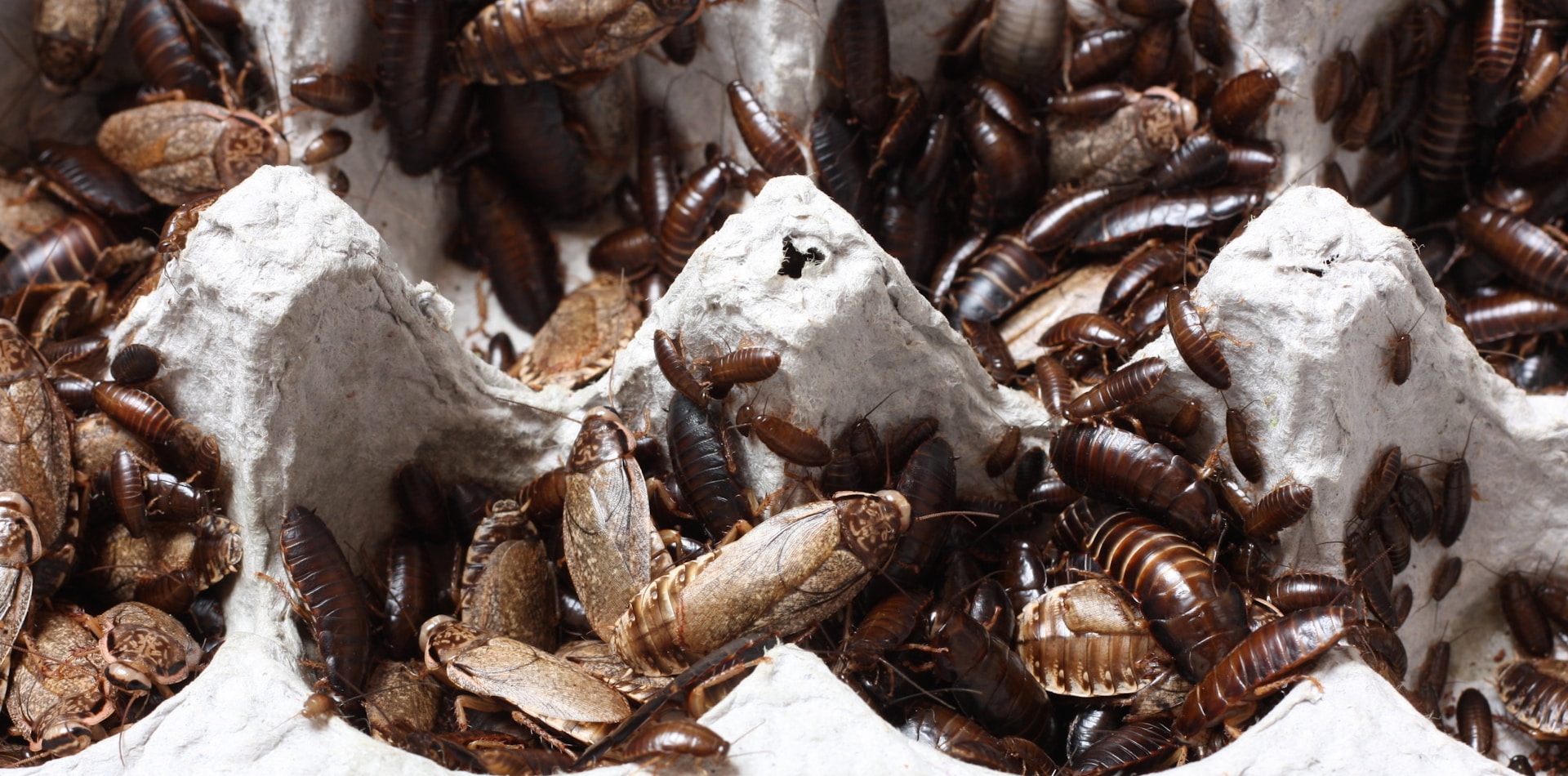
What most Floridians don’t realize: “palmetto bug” isn’t a scientific species. It’s a regional nickname that, in over 90% of cases, refers to the American cockroach (Periplaneta americana). These are the large outdoor cockroaches that live in sewers, mulch beds, and tree cavities, and they migrate indoors when conditions change. UF/IFAS reports that greater than 5,000 American cockroaches have been found in individual sewer manholes in Florida. Your plumbing connects directly to those populations.
The good news? Palmetto bugs are far more manageable than their indoor cousin, the German cockroach. They don’t colonize your kitchen. They wander in from outside. Understanding that distinction is the key to controlling them.
Key Takeaways
- “Palmetto bug” usually refers to the American cockroach, a large outdoor species that wanders indoors, not a permanent indoor pest
- Over 5,000 American cockroaches can inhabit a single Florida sewer manhole
- Cockroach allergens are found in 85% of inner-city U.S. homes and trigger asthma in sensitized individuals
- Integrated pest management (IPM) achieves 80%+ reduction in outdoor cockroach populations
What Exactly Is a Palmetto Bug?
Seven cockroach species commonly inhabit Florida homes, and the term “palmetto bug” gets applied to several of them. The larger species, American, Australian, brown, and smokybrown cockroaches, measure 1.25 to 2 inches long and are all called palmetto bugs by Florida residents. But the American cockroach is the one you’re almost certainly dealing with.
American Cockroach (The Most Common “Palmetto Bug”)
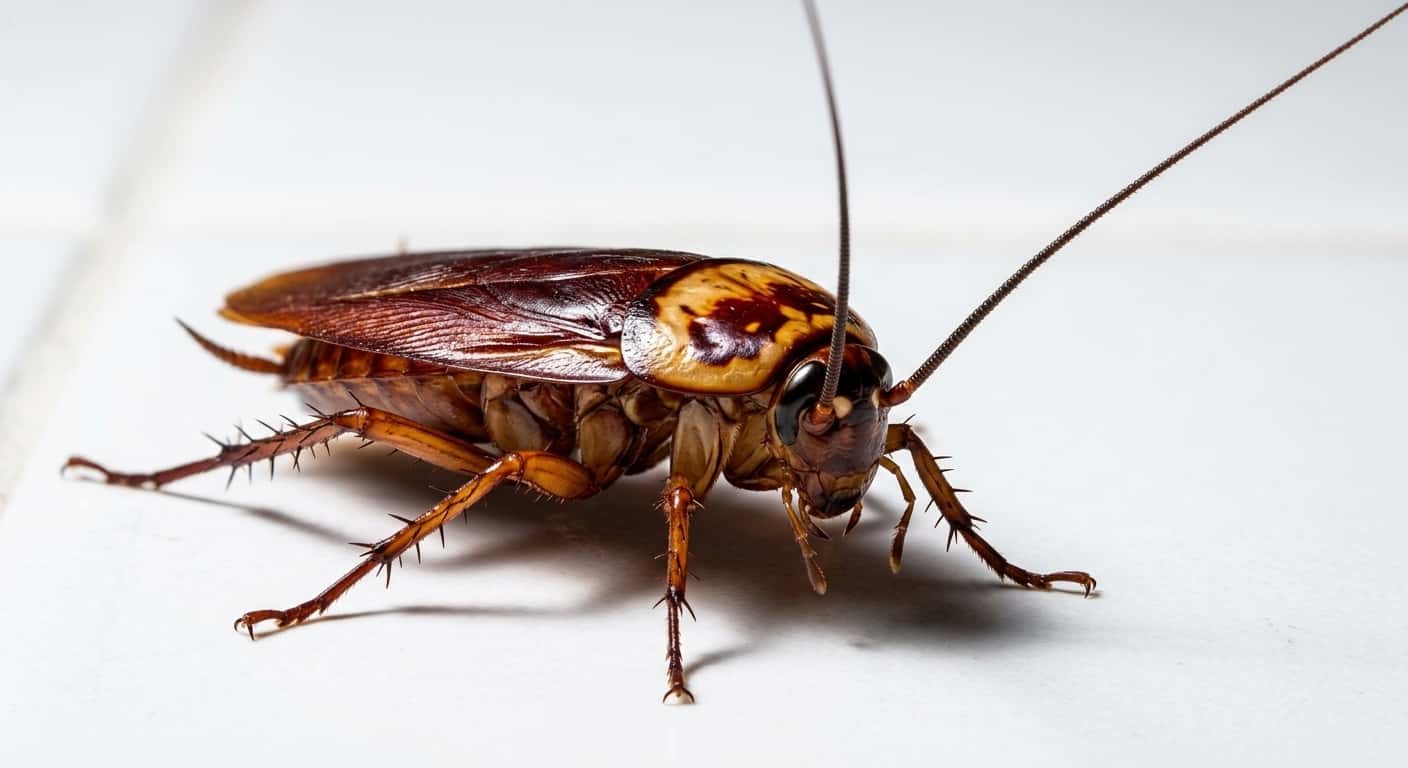
- Size: 1.5-2 inches long, the largest common cockroach in Florida homes
- Color: Reddish-brown body with a distinctive yellow shield (pronotum) behind the head with dark markings
- Wings: Both males and females have fully developed wings and can fly short distances (usually in a downward glide)
- Lifespan: Up to 15 months as an adult, with females producing an average of 150 offspring in their lifetime
- Habitat: Primarily outdoor, sewers, storm drains, mulch beds, tree hollows, woodpiles, and leaf litter. Migrates indoors through plumbing and foundation gaps.
Florida Woods Cockroach (The “True” Palmetto Bug)
- Size: 1.2-1.6 inches
- Color: Dark reddish-brown to nearly black
- Wings: Short, non-functional wing stubs, cannot fly
- Defense: Emits a foul-smelling spray when threatened (earning it the nickname “Florida stinkroach”)
- Habitat: Leaf litter, under bark, in palmetto fronds. Rarely enters homes and isn’t considered a major indoor pest.
German Cockroach (NOT a Palmetto Bug, But the Bigger Problem)
- Size: Only about 5/8 inch long, much smaller
- Color: Light brown with two dark parallel stripes behind the head
- Habitat: Strictly indoor. Colonizes kitchens, bathrooms, and areas with moisture and food
- Reproduction: 30-48 eggs per capsule, with several generations per year. One pair can produce hundreds.
- Key difference: German cockroaches are indoor colonizers. Palmetto bugs are outdoor wanderers. The treatment is completely different.
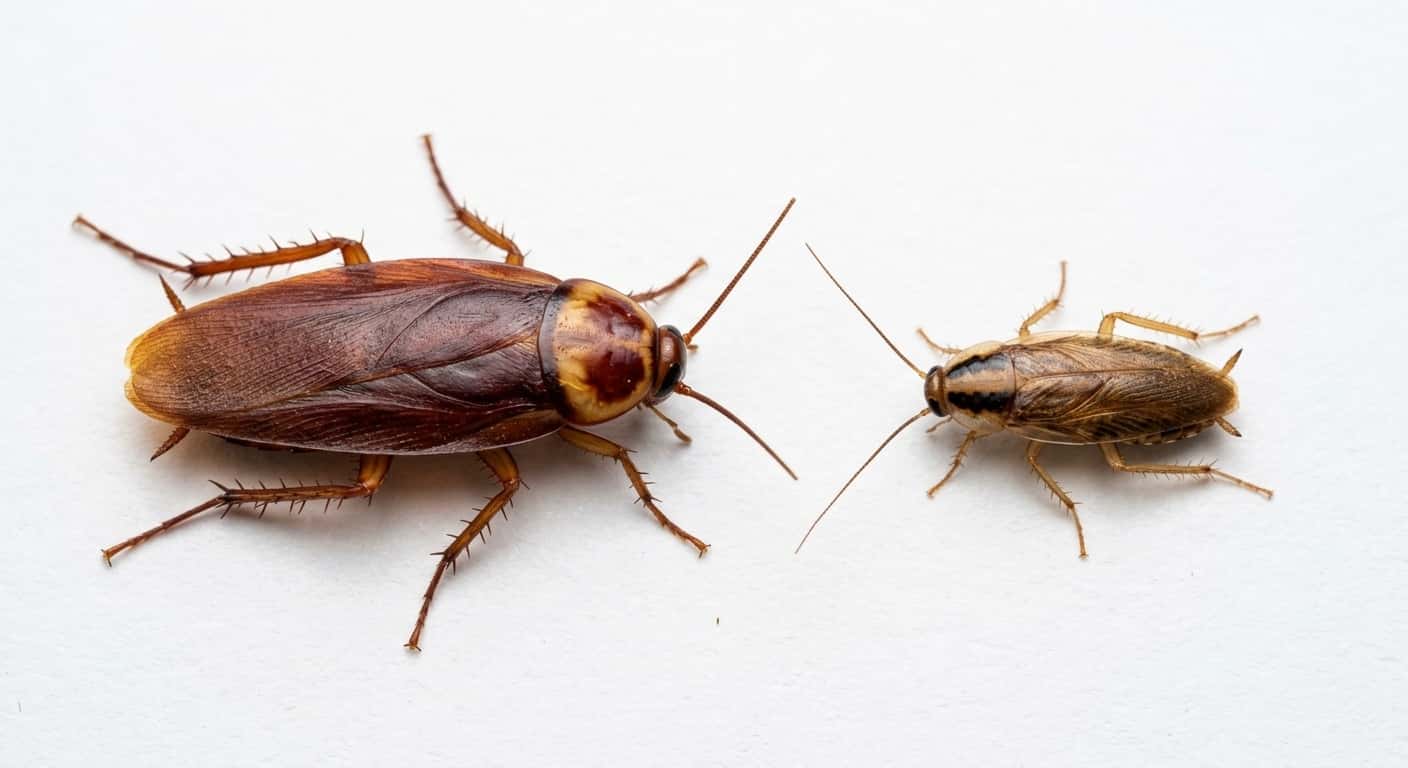
According to UF/IFAS, the seven cockroach species common in Florida homes range from small indoor colonizers like the German cockroach to large outdoor species like the American cockroach, and eliminating water sources is the single most critical factor in cockroach management. German cockroaches survive only 12 days without water but can live 42 days with water alone.
Why Are Palmetto Bugs So Common in Florida?
Florida’s climate is essentially a cockroach paradise. American cockroaches need warm temperatures and high humidity to thrive, conditions that describe Florida from March through November (and most of the winter too).
The Sewer Connection
Here’s the part that makes people squirm. American cockroaches breed in massive numbers inside Florida’s sewer system. More than 5,000 have been documented in a single manhole. They migrate from sewers into homes through plumbing connections, floor drains, toilet flanges, shower drains, and sink pipes. When sewer gases rise, cockroaches follow.
Heavy rain makes this worse. Flooding saturates sewer systems and pushes cockroaches upward through plumbing into your home. The NPMA’s 2026 forecast specifically warns that summer will intensify cockroach pressure across the Southeast.
What Attracts Them to Your Home
Palmetto bugs need three things: moisture, food, and shelter. Your home provides all three, especially in summer.
- Moisture is the #1 attractant. Leaky pipes, condensation under sinks, damp crawl spaces, and pet water bowls left out overnight are magnets.
- Food includes crumbs, grease buildup on stoves, unsealed garbage, pet food, and even cardboard and paper (cockroaches eat the starch binding).
- Shelter means dark, undisturbed spaces, inside walls, behind appliances, under cabinets, and in boxes of stored items.
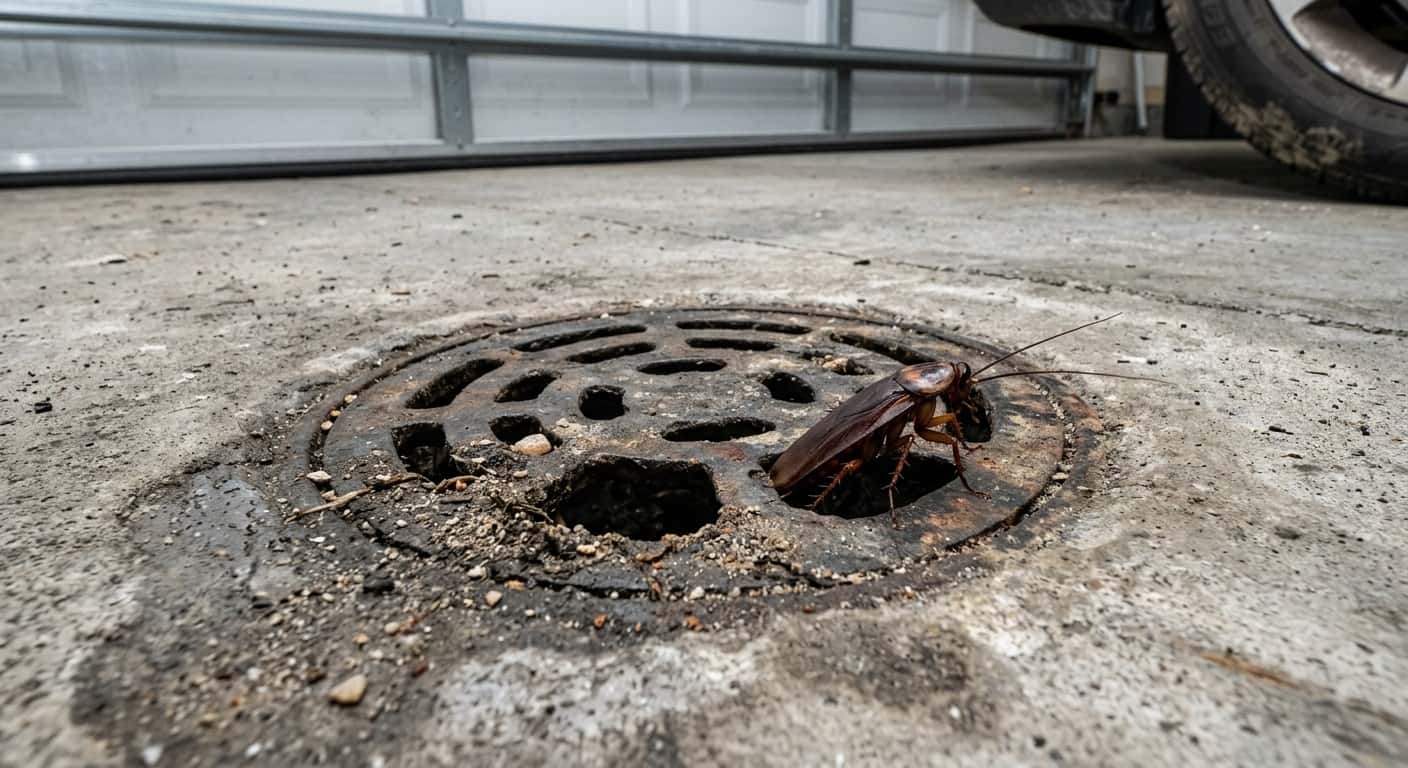
The #1 entry point we see in Tampa Bay: Floor drains in garages. Most Florida homes have a floor drain in the garage that connects directly to the sewer system. If there’s no water in the P-trap (the curved pipe section that holds water as a gas and pest barrier), it’s an open highway from the sewer to your garage floor. We tell every customer the same thing: pour a cup of water down your garage floor drain once a month.
For more summer-specific prevention strategies, see our guide on how to keep pests out of your Florida home this summer.
Are Palmetto Bugs Dangerous?
They won’t bite in any meaningful way, but palmetto bugs are a real health hazard. Cockroaches, including American cockroaches, spread 33 kinds of bacteria, including E. coli and Salmonella, six parasitic worms, and more than seven other types of human pathogens.
The allergen issue is even more significant. Cockroach feces, shed skins, and body parts produce over 20 types of airborne allergens. These allergens show up in 85% of inner-city U.S. homes. For children with asthma, cockroach allergen exposure is linked to increased wheezing, missed school days, sleepless nights, and emergency medical visits.
The prevalence of cockroach allergy ranges from 17-41% in the U.S. population, and researchers have identified cockroach allergen sensitization as one of the strongest risk factors for asthma development in urban populations. In severe cases, cockroach-triggered asthma attacks have resulted in death, making cockroach management a public health priority, not just a comfort issue.
Even a few palmetto bugs wandering through your home leave behind allergens from their droppings and shed skins. Homes with persistent cockroach activity accumulate allergen levels over time, even if you never see a large infestation.
How Do You Prevent Palmetto Bugs From Entering Your Home?
Since palmetto bugs are primarily outdoor pests that wander inside, prevention focuses on two things: making your home less attractive and sealing the entry points they use.
Eliminate Moisture (The Most Important Step)
UF/IFAS identifies water elimination as the most critical factor in cockroach control. Remove their water sources and you remove their primary reason for entering.
- Fix every leaky faucet, pipe, and toilet, even slow drips
- Repair condensation issues under sinks and around AC units
- Run bathroom exhaust fans during and 30 minutes after showers
- Empty pet water bowls at night
- Use dehumidifiers in bathrooms, laundry rooms, and crawl spaces
- Pour water down infrequently used drains monthly to maintain P-trap seals
Seal Entry Points
- Caulk all gaps around windows, doors, and where pipes enter walls
- Install door sweeps on every exterior door. If you can see daylight under the door, palmetto bugs can enter
- Screen floor drains in garages and laundry rooms with fine mesh drain covers
- Seal around plumbing penetrations under sinks and behind toilets
- Repair window screens. Even small tears allow entry
- Check weep holes in brick exteriors. Install pest-proof weep hole covers
Reduce Outdoor Habitat
- Keep mulch to a thin layer no more than 2-3 inches deep, and maintain at least 12 inches between mulch and your foundation
- Clear leaf litter, woodpiles, and debris from against your home
- Trim vegetation back from exterior walls
- Remove standing water sources (plant saucers, clogged gutters, birdbaths)
- Store firewood at least 20 feet from the house and elevated off the ground
Eliminate Indoor Food Sources
- Wipe counters nightly and sweep floors. Crumbs are a buffet
- Clean grease buildup behind stoves and around oven vents
- Store pantry items in airtight glass or hard plastic containers
- Don’t leave pet food out overnight
- Use garbage bins with tight-fitting lids and take trash out daily
- Recycle cardboard boxes promptly, don’t store them (cockroaches eat the starch)

For a season-by-season exclusion checklist, see our guide on how to pest-proof your home for each season.
How Do You Get Rid of Palmetto Bugs Already in Your Home?
If you’re finding palmetto bugs inside regularly, prevention alone isn’t enough. Effective treatment combines three components working together.
Bait-Based Treatment
Bait is the most effective long-term treatment for cockroaches. Palmetto bugs consume the bait, return to their harborage, and die. Other cockroaches then contact the dead insect’s body and feces, which still contain the active ingredient, creating a cascading kill effect that reaches cockroaches deep in wall voids and hidden harborage you’ll never see. Professional bait placement requires understanding where palmetto bugs shelter, how they travel through a structure, and which harborage areas hold the highest concentrations. Placing bait in the wrong locations wastes product and leaves the core population untreated.
Perimeter Barrier Treatment
A residual insecticide barrier applied around the home’s exterior foundation intercepts palmetto bugs migrating from outdoor harborage, mulch beds, tree hollows, and sewer connections, before they enter the structure. The barrier must be applied as a continuous band along the correct surfaces, at the right concentration, and reapplied on a schedule that maintains its effectiveness between service visits. Gaps in coverage or degraded product create entry corridors that palmetto bugs will find.
Drain and Entry Point Management
Because palmetto bugs migrate through plumbing connections from sewer populations numbering in the thousands, the plumbing entry pathway must be addressed directly. This includes ensuring all drain traps maintain their water seal, screening floor drains in garages and utility rooms, and managing the organic buildup inside drains that attracts cockroaches upward through the system. A professional inspection identifies which specific drains and plumbing penetrations are serving as active entry points in your home.
Each of these components needs the right products, proper application technique, and consistent maintenance. Liberty Pest Management’s quarterly service combines all three, bait placement, perimeter treatment, and entry point management, into a single integrated program. Contact us for a free inspection.
What NOT to Do
- Don’t use bug bombs (total-release foggers). They disperse insecticide into open air but don’t reach cockroaches hiding in wall voids, behind appliances, or inside drains. UF/IFAS confirms that chemical use alone is the least effective method of cockroach management.
- Don’t spray and pray. Broadcast spraying kills the cockroaches you see but repels others deeper into hiding. It also drives them away from bait stations.
- Don’t ignore moisture. No amount of chemical treatment overcomes a persistent moisture problem.
What actually works: UF/IFAS research shows that integrated pest management, combining sanitation, moisture control, exclusion, and targeted chemical treatment, achieves 80% or better reduction in outdoor cockroach populations. Chemical-only methods consistently underperform. The professionals who get the best results in Tampa Bay are the ones who spend more time sealing entry points and identifying moisture sources than they do spraying.
If you’re unsure whether your situation warrants professional help, check out our guide on when to call an exterminator.
When Should You Call a Professional for Palmetto Bugs?
Even an occasional palmetto bug sighting often signals conditions that attract more. A professional inspection can identify entry points and moisture issues before the problem grows.
Call a professional if:
- You’re seeing palmetto bugs inside multiple times per week despite prevention efforts
- You’ve found cockroach droppings in kitchen cabinets, behind appliances, or in bathrooms, this suggests established indoor activity
- You see small cockroaches (German cockroaches), these need aggressive professional treatment
- You find egg cases (oothecae), dark, purse-shaped capsules about 1/3 inch long. Each one contains 12-16 eggs for American cockroaches or 30-48 for German cockroaches.
- Anyone in your household has asthma or allergies that could be triggered by cockroach allergens
- Your home has persistent moisture issues you can’t resolve (crawl space dampness, plumbing leaks behind walls)
Liberty Pest Management offers cockroach treatment tailored to the species and severity of your infestation. Our quarterly prevention plans include cockroach treatment as part of the standard service. Contact us for a free quote.
Frequently Asked Questions
Are palmetto bugs and cockroaches the same thing?
Yes, palmetto bugs are cockroaches. The term “palmetto bug” is a regional nickname used in the southeastern U.S. that most commonly refers to the American cockroach (Periplaneta americana). In Florida, it can also describe other large cockroach species including the smokybrown, Australian, and Florida woods cockroach. There’s no entomological difference between a “palmetto bug” and a cockroach.
Can palmetto bugs fly?
American cockroaches, the species most commonly called palmetto bugs in Florida, have fully developed wings and can fly short distances, typically in a downward gliding pattern. They’re more likely to fly in warm, humid conditions, which is why Florida residents experience this more than people in cooler climates. The Florida woods cockroach (the “true” palmetto bug) has only short wing stubs and cannot fly.
Why do palmetto bugs come inside when it rains?
Heavy rain floods the outdoor habitats where palmetto bugs live, sewer systems, mulch beds, tree cavities, and ground-level burrows. As water saturates these areas, cockroaches move upward and inward, entering homes through plumbing connections, foundation cracks, and garage door gaps. UF/IFAS notes that more than 5,000 American cockroaches can inhabit a single sewer manhole, and flooding pushes this population toward residential plumbing connections.
How long do palmetto bugs live?
Adult American cockroaches can live up to 15 months. A female produces an average of 150 offspring during her lifetime, creating an egg case (ootheca) containing 12-16 eggs approximately every 4 days at peak reproduction. The complete lifecycle from egg to adult takes about one year for American cockroaches in Florida.
Does seeing one palmetto bug mean you have an infestation?
Not necessarily. A single American cockroach inside your home likely wandered in from outdoors, through an open door, a gap under the garage, or a plumbing connection. Normal in Florida and doesn’t indicate an infestation. However, if you see them inside regularly (multiple times per week), find droppings, or discover egg cases, the problem has moved beyond occasional wandering into established indoor activity that warrants treatment.
Take Control of Palmetto Bugs in Your Florida Home
Palmetto bugs are a fact of life in Florida. You won’t eliminate them from the environment, there are too many, and our climate is too hospitable. But you absolutely can keep them out of your home.
Focus on the fundamentals: eliminate moisture, seal entry points, reduce outdoor habitat, and maintain clean food storage. These steps handle 80% of the problem. For the remaining 20%, targeted bait treatment and professional quarterly service provide the ongoing barrier that keeps palmetto bugs where they belong, outside.
Start this week:
- Pour water down your garage floor drain and all infrequently used drains
- Check under every sink for leaks or condensation
- Install door sweeps on exterior doors
- Clear mulch and debris away from your foundation
- Schedule a professional inspection if you’re seeing palmetto bugs regularly
Schedule a free inspection with Liberty Pest Management to get your palmetto bug problem under control.
Liberty Pest Management serves the Tampa Bay area including Odessa, Trinity, Land O’ Lakes, Wesley Chapel, and surrounding Pasco County communities. Licensed by the Florida Department of Agriculture (JB-151032). Call us at 813-961-2627 or get a free quote today.